Wednesday, July 31, 2013

CAUSE GARDNER'S ARE BUSY PEOPLE TOO!

If I could figure out how it is that after taking a day off I somehow managed to end up a week behind schedule I'm pretty sure I could unlock the secrets of the universe. But, until then, I am reminded that we all have too many things to get done and somehow less and less time to do them in. And as much as I would like to spend all day puttering around the yard, the reality is I have way too much other crap to get done. Ultimately, if I don't spend the little bit of free time I do have strategically the whole thing goes to hell in handbasket (do people say that anymore?) in less than a season. Anyway, at least as far as yard work is concerned I'd like to think I'm pretty demanding of myself, but I'm also pretty demanding of my plants. I definitely don't have the time to pamper myself, so I'm pretty damn sure not gonna do it for what I'm throwing in the ground.

My demands are pretty simple. Aside from meeting some basic cultural requirements (light, moisture, etc.) I want what every other gardner wants, to plant it and forget it. After which I not only expect it to thrive, but preferably weave (aka seed itself lightly) through the garden. Enough to fill in whatever gaps there might be, but not enough to be a nuisance. Granted, in no universe would I be considered an experienced gardner, but in my limited experience I have managed to compile a list of "go to" plants that never seem to dissapoint me, provided they are at least moderately well-sited. For the most part they are fairly well behaved, but always happy to volunteer (almost always it seems in just the right spot). Some may find these plants a bit (or entirely) too weedy for their liking, but as far as I'm concerened all garden plants should be at least a little weedy; let'em loose and battle it out. The only real way to garden if you ask me.


DRY AND SUNNY


Lychnis coronaria (Rose Campion)


Opunitia humifusa (Eastern Prickly Pear)


Euphorbia corollata (Flowering Spurge)


Agastache rupestris (Sunset Hyssop) - needs excellent drainage and a sandy soil in the northeast, but one of my favorite plants. Will reseed if conditions are to its liking. Wonderfully scented foliage somewhere between rootbeer and mint. Semi-woody perennial that shouldn't be cut back till spring to improve cold hardiness.


Perovskia atriplicifolia (Russian Sage) - not really thought of as a reseeder, but will if there is some open ground nearby.


Echinops ritro (Globe Thistle)


Oenothera speciosa (Pink Evening Primrose) - Have never actually had any luck growing this myself, but have never really given it what it needed either (lots of sun, heat, and fairly dry, quickly draining soil). Have seen it growing exuberantly all around where my area if these conditions are met.


AVERAGE AND SUNNY


Platycodon grandiflorus (Ballon Flower)


Oenothera fruticosa (Sundrops) - admittedly, an aggresive plant, but not too tall, so as long as it has taller neighbors, a great filler.


Tradescantia spp. (Spiderwort)


Allium tuberosum (Garlic Chives) and Allium schoenoprasum (Chives)
If I had to choose between the 2, I'd have to go with A. tuberosum. It stays fresh looking the entire growing season and blooms late when most of the perennial bed has already closed up shop for the season. Another plus is the persistent seed heads, which are just about as pretty as the flowers themselves. Both species will reseed.


Echinacea purpurea (Purple Coneflower)


Valeriana officinalis (Valerian or Garden Heliotrope)


Saponaria officinalis (Soapwort) - not common in the trade, but common everywhere else. Sidewalks, roadsides, cracks in walls, and the occasional garden. While somewhat aggressive, it is one of the few plants that looks fresh in the heat of the summer.


Adenophora spp. (Ladybells)


Campanula takesimana (Korean Bellflower) - Will spread far and wide. Roamer and a romper.


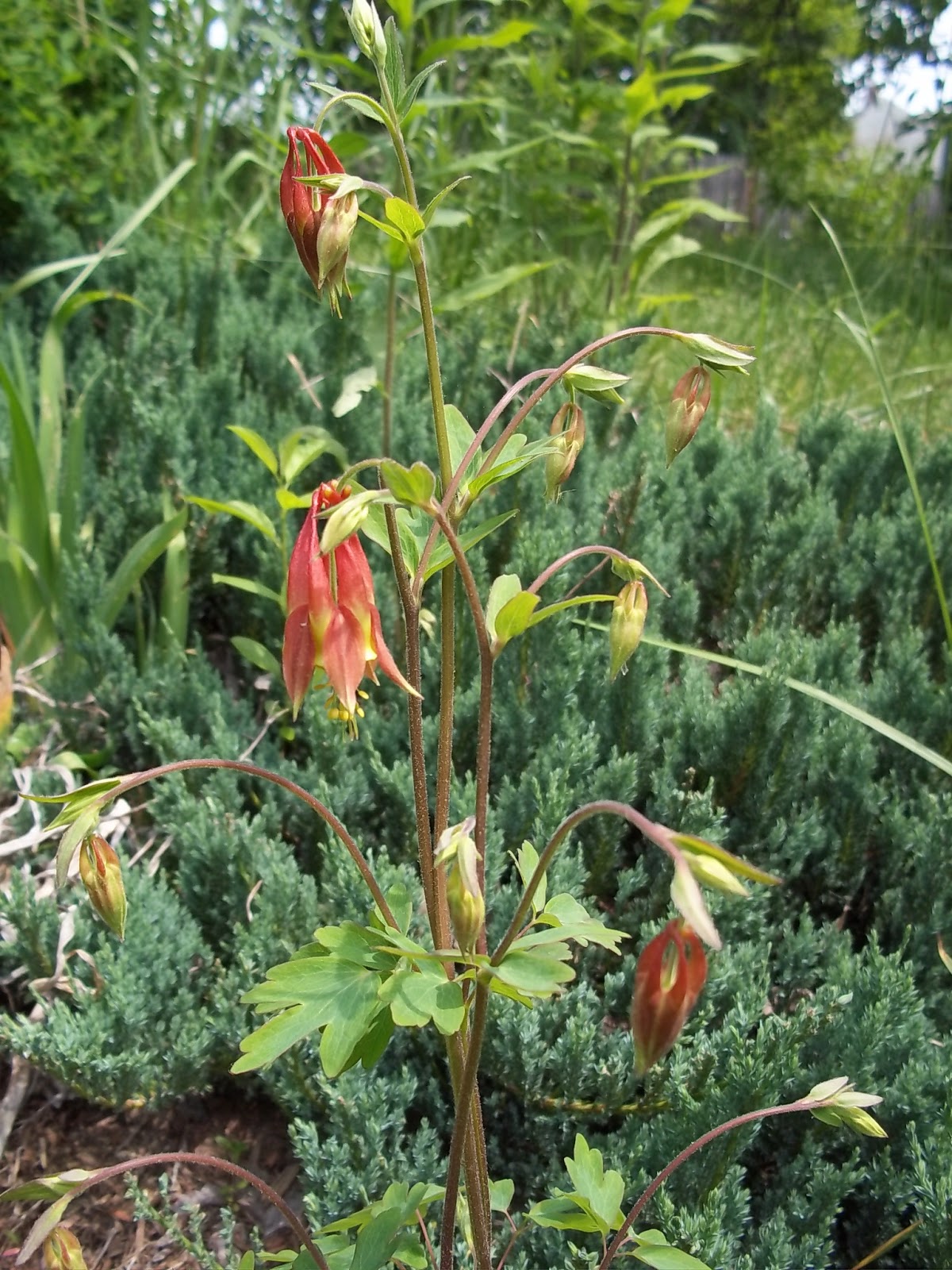
Aquilegia vulgaris (European Columbine) and Aquilegia canadensis (Eastern Red Columbine) - Pink form of A. candensis ('Pink Lanterns') as well


MOIST/WET AND SUNNY
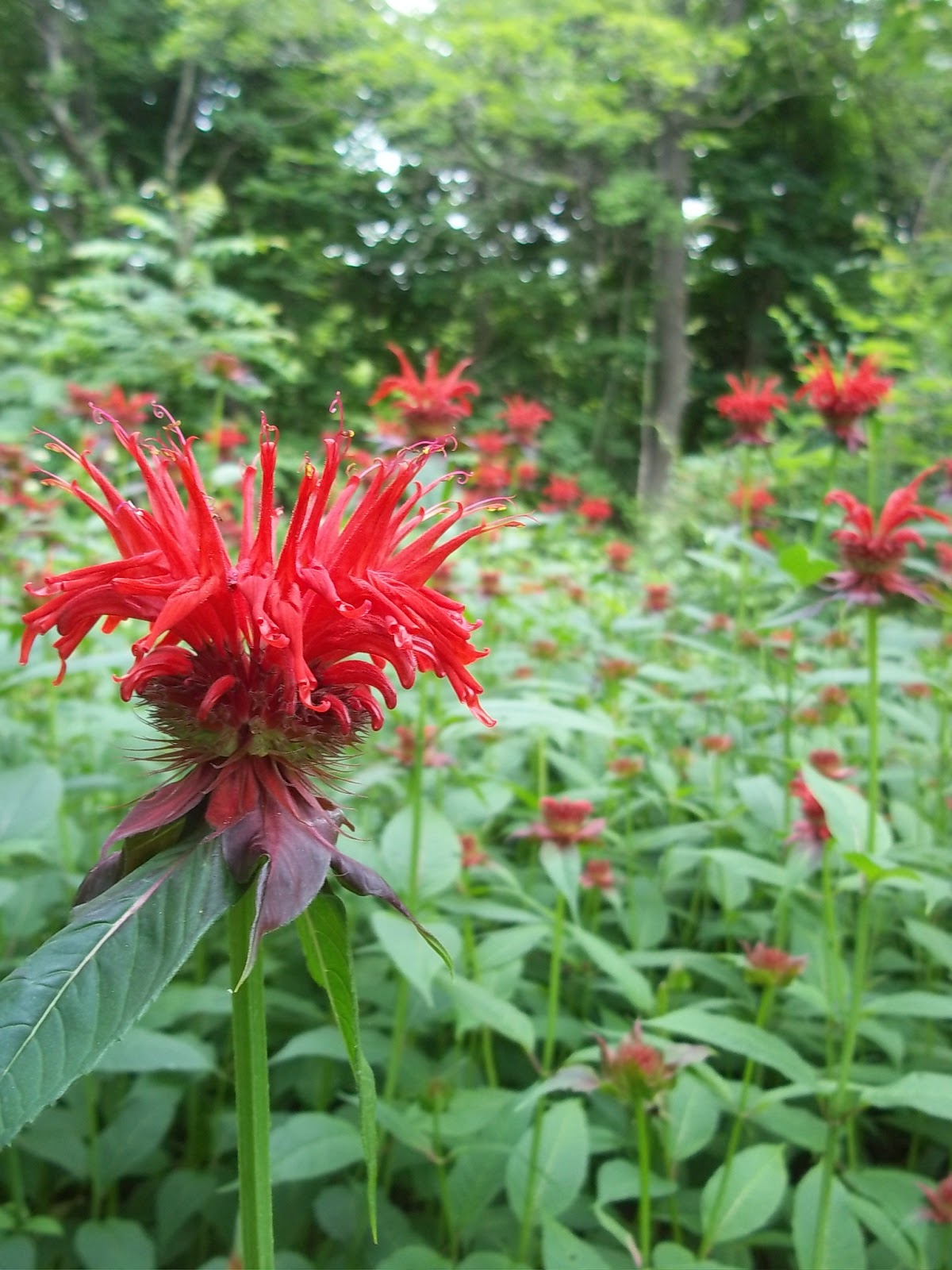

Monarda didyma 'Jacob Cline' (Jacob Cline Bee Balm) - THE BEST bee balm. Bee balms are, especially this one, at their best when given consistently moist, moderately wet soil. Drought sends them packing.


Lobelia siphilitica (Great Blue Lobelia)


Lobelia cardinalis (Cardinal Flower)


Eupatorium spp. (Joe Pye Weed) - Do not plant this in anyplace that dries out! It will persist, but will look pretty crappy and give Joe Pye Weed a bad name when in reality it is a first rate plant. Consistently moist/wet soil only!!!


Lychnis flos-cuculi (Ragged Robin)


MOIST/WET AND SHADY


Brunnera macrophylla (Siberian Bugloss) - Can also tolerate drier soils. Awesome plant. Very adaptable.


Thalictrum pubescens (Tall Meadow-Rue)


Chasmanthium latifolium (Northern Sea Oats) - Can also tolerate drier soils.


AVERAGE/DRY AND SHADY


Helleborus orientalis (Lenten Rose)


Geranium x cantabrigiense (Hybrid Bigroot Geranium) - Also try G. x cantabrigiense's parents G. dalmaticum & G. macrorrhizum. Both are just as good as their awesome child. Shade and drought tolerant. Can be used as a groundcover. Semi-evergreen foliage colors nicely in the fall.


Eurybia (formerly Aster) divaricata (White Wood Aster)


Symphyotrichum (formerly Aster) cordifolium (Blue Wood Aster)


Dicentra eximia (Wild or Fringed Bleeding-heart)


Stylophorum diphyllum (Celandine-Poppy or Wood Poppy) - Very underutilized native woodland wildflower that happily reseeds. Not to be confused with the non-native weed Chelidonium majus (Greater Celandine).

Sunday, July 14, 2013

HYDRANGEAS AND OTHER STUPID PLANTS

Plastic is a miraculous material. Versatile, durable, and pretty much responsible for almost every modern convenience you can think of. While, I obviously appreciate plastic’s unique properties, they have no business in the landscape. Which is why I get pretty t’d-off when the profession as a whole seems to be forever moving in an increasingly plastic direction. In fairness this isn’t a recent trend, people have long been selecting against the ephemerality that makes gardens such a cool thing to create. But it’s understandable once you think about it. Why wouldn’t you want to prolong the time you have to experience something beautiful?; vibrant blooms in the heat of summer, lush green foliage in the dead of winter, but the unfortunate reality is nothing worth having comes without a price.

Which brings me to the hydrangeas, specifically H. macrophylla. They’re a pretty solid staple of the ornamental horticultural industry, especially with the introduction of the new mophead hydrangea ‘Endless Summer’ several years ago that blooms reliably through zone 4 with its unique ability to flower on both new and old wood (previous cultivars only flowered on old wood). Now don’t get me wrong, they’re beautiful, easy to grow, and very floriferous, but in our effort to perfect the perfect plant, we lost the very thing that the plant put so much effort into advertising in the first place,.... rich nectar stores for foraging bees, butterflies and other pollinators.

Two things you might not be aware of: 1. All mopheads are a human selected mutations that don’t exist outside of cultivation and, 2. The showy part of the hydrangea inflorescence is sterile, meaning it produces no nectar, no pollen, nor is it capable of producing any viable seed. Not surprisingly the flowers of a mophead are so showy because they are composed entirely of these big flashy sterile florets that were meant to attract pollinators to the smaller, significantly less showy fertile flowers which are entirely absent, so they’re basically the botanical equivalent of a tease. One big empty promise.


Hydrangea macrophylla (aka Bigleaf Hydrangea): Mophead Inflorescence (left), Lacecap Inflorescence (right)

The point is, that as our functioning endemic habitats continue to shrink, the left over bits of space we have to work with should be full of hyper-functional (preferably native) plants, not horticultural monstrosities that have become nothing more than transpiring heaps of perverted eye-candy. Beyond that, I believe that when actual species are used rather than some over selected, over hybridized, over breed cultivar, this utility translates in the feel of the space. Most people, whether they realize it or not, can perceive the sustainability of a design. There’s something about a space that can persist outside of our weedwackers, leaf blowers and chemical fertilizers that is both comforting and calming. This is why, at least in my humble opinion, there is no more lofty a goal for a designer than to create a place that has the ability to thrive and weave itself into the existing fabric of a place, until the fact that it was designed at all is entirely unperceivable. In short, go with a lacecap or at least the lacecap alternative to ‘Endless Summer,’ ‘Let’s Dance Starlight.’ Still pretty for people, plenty of food for the bees, and they wont flop over when it rains.

And for your entertainment.... more plants that we've screwed up!


Delphinium


Tulip


Rosa rugosa


Sunday, July 7, 2013

THE UNTAMABLES

Some plants refuse to be tamed, where no amount of fussing, pampering, or coddling ever seems to make them happy in the garden. Just like wild animals, these plants are best left to their own devices to roam free in the areas they colonize on their own. Of course, this elusivity and tempermentality, only adds to their alure. More importantly, the inability to bring these plants into cultivation points to the complexities of soil biology and ecology that these plants rely on to survive. A relationship that people have yet to fully understand, or at least have the ability or means to adapt in a controlled production setting. Most of the literature I have read, at least as it pertains to these types of "untamable" species, points to an extreme interconnectedness and dependency on the soil microfauna that makes them so difficult to cultivate in the garden.

In the specific instances of the plants that I've been lucky enough to have cross my path, they are often found in low light environments, which (at least initially) may have lead to phyotosynthetic deficit that the plants have evoloved to compensate for by forming very strong relationships with the soil mircofauna, the most common of these being mycorrhiza. This broad term is used to refer to a diverse group soil fungi that nearly all plants utilize to increase the functionality and performance capacity of their roots. While I won't get into the boring minuscule details, the science of mycorrhiza is something that all gardeners and designers should at least have some basic understanding of, and if you've never heard about it, its time you read (or watched) up. There's already a line of products geared toward mycorrhizae establishment so rather than dumping unnecessary amounts of chemical fertilizers that often damage soils in the long term, you may want to take a look at some of these products instead.

Getting back to the plants.... while I'm sure there are many more examples than what I know of, the most common and interesting of these that takes things to an extreme is the Ghost Plant, Indian Pipe, or Corpse Plant (perhaps the most fitting of the names as there is definitely something unsettling about these little guys). Their translucency is a result of a complete lack of photosynthetic activity, as they are now completely dependent on the soil mycorrhizae for nourishment, and therefore have no need to produce food on their own. So the next time you come across one of these guys, just appreciate them for what they are, beautiful reminders that somethings were just never meant to be tamed.


Monotropa uniflora (Ghost Plant, Indian Pipe, or Corpse Plant)


Monotropa uniflora (Ghost Plant, Indian Pipe, or Corpse Plant)


Cypripedium acaule (Pink Lady's Slipper) - Taken just a few 100 ft from the airport entrance at Martha's Vineyard


Chimaphila maculata (Spotted Wintergreen)


Chimaphila maculata (Spotted Wintergreen)


Chimaphila maculata (Spotted Wintergreen) and Monotropa uniflora (Ghost Plant, Indian Pipe, or Corpse Plant)