Showing posts with label native wildflower. Show all posts

Tuesday, June 10, 2014

RECOGNIZING THE LATENT EDEN


Solidago ?speciosa/nemoralis? - One day I'll learn each of the species.... hasn't happened just yet

I don't fault anyone for trying to achieve their idealized sense of beauty. We all do it, at least to a certain extent. Its human nature, but when this quest is mindless, in the pursuit of the unattainable and unsustainable, simply perpetuating an identity-less homogenized cultural standard, it erases the very things from which beauty is derived: the unique, the querky, and the off-kilter. This has become painfully apparent to me after getting a bit swept up in my own quest.

Since leaving for school..... almost ten years ago (deep sigh), and the gardens I puttered in growing up were slowly (or not so slowly) lost to the weeds, my attention was refocused on a rental property my parents owned (mainly because it was close to where I'm currently living, and also cause it had a yard.... something that probably won't be in my future for quite some time... damn student loans). While I have been gardening there for a few years now, my recent overly ambitious undertaking (involving a grant proposal, waaaay too many trips to local town government, and far too many flats of tiny plants) has not only made me question the project itself, but why I garden and to what end.

Unfortunately, in answering this question I've realized I'm guilty of the very thing I've often faulted others for doing ("perpetuating an identity-less homogenized cultural standard....."). While I take full responsibility for my own blind pursuit, I can't help but blame my education at least a little. In school I was bombarded with big projects, grand gardens, most of which were maintained by full time staff and often had the same financial resources at their disposal as some small towns. These designs are not only unattainable by the average person's standards (and I am most definitely below average), but unless you have a small personal fortune these landscape are unattainable by well, just about everyone's standards. Yet these handful of elite projects that are constantly regurgitated by academia somehow set the bar to which all others are measured.

While I realize I was educated as a landscape architect, and not a gardner, I believe it is impossible to separate the two; one informs the other. And ultimately, if my curriculum focused more on the small and intimate and less on the large and lofty I might have learned to look beyond my own preconceptions and keep them from blinding me from the innate beauty and value that already exists in the places I'm tasked with "improving." This realization hit me hard this spring in the varied forms of Serviceberry, Violets, and Goldenrod (and yes I know goldenrod flowers in late summer/fall).

The first slap was a bit delayed.... after buying a fancy selection of Serviceberry (Amelanchier sp.) a few years back ('Robin Hill' if I remember correctly) and patting myself on the back for picking such a great native plant it soon became thoroughly infested with cedar rust to the point where every square inch of new growth was covered with a delicate orange fuzz, not unlike our family's neon shag carpet we kept in the living room that I remember getting lost in when I was a toddler (I still say it was trying to eat me). No matter how much I fawned or trimmed it made no difference. Eventually I dug the whole thing up and moved it to where cedars weren't a problem. If I had spent a little less time patting myself on the back and a little more time getting to know the place that I was trying to "improve" I might have noticed the small silver-trunked multi-stemmed trees growing at the edges throughout the property. This tree was, of course, our endemic, cedar-rust resistant Serviceberry, growing happily, despite, the abundant red cedars growing nearby. It's been almost 5 years since I transplanted the tree. I just noticed the existing Serviceberries this year, and only because my dad pointed them out to me and asked me what they were. NOT ACCEPTABLE. NOT ACCEPTABLE AT ALL!!!


Amelanchier ?canadensis? - ditto

The second (not so delayed) slap in the face came after purchasing a packet of Confederate Violets (Viola soraria var./forma priceana or 'Priceana'), the white violet with blue throats that often dots lawns and yard edges in spring time. While some might consider it a weed, I've always gotten a little envious when I've seen it sprinkled in other peoples lawns. After being 100% certain that the rental property was completely violet free I decided to buy a packet of seeds. Sure enough, this spring, Confederate Violets seemed to spontaneously generate in every place I looked, blatantly mocking my ignorance and total lack of observation.


Viola sororia priceana and the additional seedlings that were entirely unnecessary

The third and final wake up call occured when I was pulling up "weeds" to make way for the new meadow plants that were part of the the grant project I worked so hard for. The majority of the "weeds" were a few species of Goldenrod (Solidago spp.) that were vigorously out-competing the young weak little guys that my family and I had planted the previous fall. About a half hour into it, I remembered the same spot, from years before, crowded with Goldenrod in full late summer glory, nearly glowing in the late afternoon light.... the same plants I was zealously yanking up to make way for the newer, shinier replacements that might not even survive the summer.


Hopefully it was worth it....

My education had lead me to believe that designing, and for that matter gardening, implies not only complete modification, but the grand imposition of beauty where it is lacking. While there are instances where this is true, the more experience I get the more I have come to believe that this definition is far from the only one. While, yes, the imposition of some foreign tectonic edifice is often impressive, it does little to reveal the true nature of a place. The most skillful designers use existing elements that are already in place and build on them. Whether through multiplication, or selective deletion, those designers I truly admire utilize a more delicate process. They celebrate and embrace the eccentricities of the spaces in which they create rather than ignore them. For if, in our quest for beauty, we continually destroy and erase more than we reveal and embrace, then not only do the ends fail to justify the means, but the only product of the process is discontent and waste. So the next time you have the urge to run down to your local nursery to buy a few gaudy plants to fill some empty void on your property (and maybe your soul as well) do your best to resist, even if only for a little bit, and take a walk around your yard, or maybe even across the street. See what's there and try to look at things with new eyes. You might realize you already have what you're looking for.

Sunday, August 25, 2013

SEEDS!!!!!!

After realizing that my last few posts have been a bit on the morbid side coupled with the fact that I've had a bad past few weeks (packed full of towed cars, wisdom tooth infections, and unnecessarily large and unexpected bills) I decided to take a more positive approach this week and start to think about plants for next year. Figured it was also a good way to beat those end of summer blues that we all get 'round this time. So, with this coming year (in my head the end of summer has always marked the logical end of the year, apparently the fear of starting school has had a lasting impact on my chronological psyche) I'm determined to at least do a few things ahead of time, mainly buying seeds. Last spring, per my usual way of doing things, I waited to the last minute to order and (surprise, surprise) the majority of the plants I ended up with required months of stratification. Which would have put the actual germination time somewhere near the end of September, perfectly coinciding with the first frost..... thats what I get for not doing my research.

Ideally I want to start growing things in early March/late February this time around (indoors obviously) to give myself a good head start on the growing season. Add several months for those species that require complex stratification processes (processi?) and the best time to start thinking about ordering for the next growing season is, well,..... now. This year I've decided to stick (mostly) with plants that are native to the eastern U.S.. But before I get to the plants I'm thinking about, if your not too familiar with the complexitities of collecting and growing native plants from seed it's as much of an art as it is a science, one I have yet to master. But, in case you think you might wanna try, here are a few good primers to get yourself acquainted:

- Native Seed Propagation Methods (Missouri Botanic Garden)

- How to Germinate Native Seeds (Prairie Moon Nursery)

- Propagating Native Plants (Ion Exchange, Inc.)

- Seed Collecting (Ion Exchange, Inc.)

- Drying Native Seed (Ion Exchange, Inc.)

- Notes from William Cullina - Why you Can't Buy A Forest in a Can

- The New England Wild Flower Society Guide to Growing and Propagating Wildflowers of the United States and Canada (William Cullina)


Anyway here's a few of the plants and the companies I'm ordering from. Now for hard part....whittling down the list.


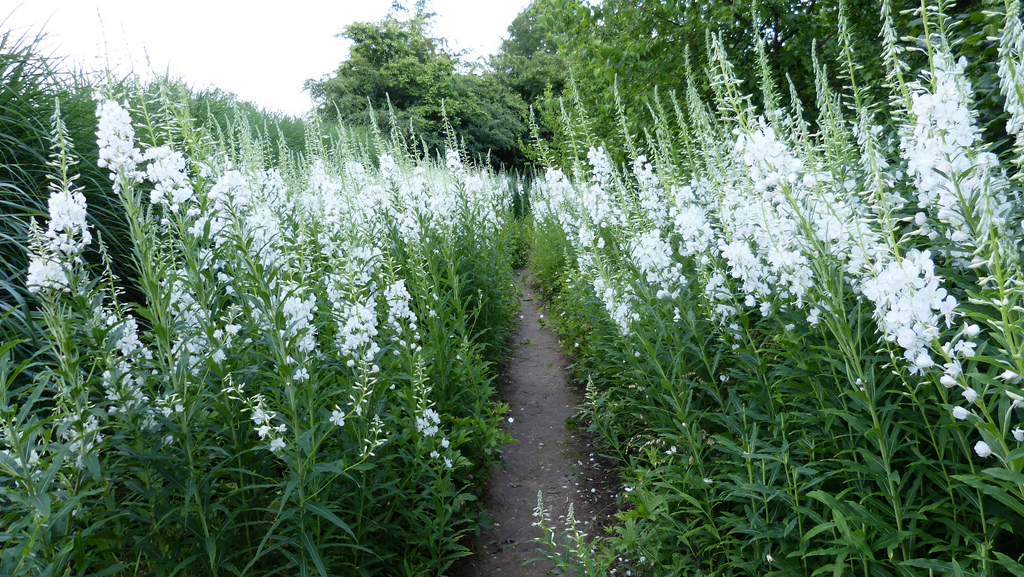
Epilobium angustifolium 'Album' - http://b-and-t-world-seeds.com/ or http://www.plantexplorers.com/
The last time I saw this plant I was hiking in the White Mountains, so I'm betting that it's not very heat tolerant. But this picture I came across was way too seductive so I'm gonna give it a try anyway. The straight species is a bright magenta/pink. Ironically the white version is only available from a few companies based out of the U.K.. Hopefully it won't be a problem.


Hydrophyllum appendiculatum/virginianum - http://www.prairiemoon.com/
A little known reseeding woodland biennial of the northeastern states. Definitely looks like it's worth a try.


Symphyotrichum cordifolium, syn. Aster cordifolius - http://www.prairiemoon.com/
Always loved this late flowering aster. So long as the soils not too wet it seems to be happy wherever it finds itself.


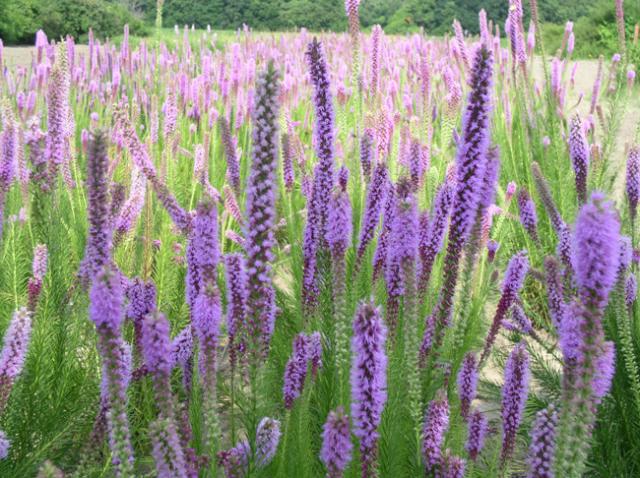
Liatris pycnostachya - http://ionxchange.com/
In the northeast, given water generally isn't too limiting a factor (relative to other parts of the country), height is king. This is the tallest of the Liatris (5 ft) and probably the best best competitor if you're trying to naturalize in a meadow. Inherited a clump of these and took me a while to pinpoint the species.


Allium cernuum - http://www.prairiemoon.com/
Probably the best native allium, and given I have a pretty bad deer problem I've been waiting to give these guys a try (all alliums are deer resistant).


Chasmanthium latifolium, syn. Uniola latifolia - http://www.prairiemoon.com/
I've seen this grass doing well in way too many places not to grow it.


Lychnis flos-cuculi var. alba - http://www.plant-world-seeds.com/
This is a cute little european native that has naturalized in moist to wet meadows throughout the northeast. Usually comes in pink, but really like the white version. Re-seeds almost always.

Sunday, July 14, 2013

HYDRANGEAS AND OTHER STUPID PLANTS

Plastic is a miraculous material. Versatile, durable, and pretty much responsible for almost every modern convenience you can think of. While, I obviously appreciate plastic’s unique properties, they have no business in the landscape. Which is why I get pretty t’d-off when the profession as a whole seems to be forever moving in an increasingly plastic direction. In fairness this isn’t a recent trend, people have long been selecting against the ephemerality that makes gardens such a cool thing to create. But it’s understandable once you think about it. Why wouldn’t you want to prolong the time you have to experience something beautiful?; vibrant blooms in the heat of summer, lush green foliage in the dead of winter, but the unfortunate reality is nothing worth having comes without a price.

Which brings me to the hydrangeas, specifically H. macrophylla. They’re a pretty solid staple of the ornamental horticultural industry, especially with the introduction of the new mophead hydrangea ‘Endless Summer’ several years ago that blooms reliably through zone 4 with its unique ability to flower on both new and old wood (previous cultivars only flowered on old wood). Now don’t get me wrong, they’re beautiful, easy to grow, and very floriferous, but in our effort to perfect the perfect plant, we lost the very thing that the plant put so much effort into advertising in the first place,.... rich nectar stores for foraging bees, butterflies and other pollinators.

Two things you might not be aware of: 1. All mopheads are a human selected mutations that don’t exist outside of cultivation and, 2. The showy part of the hydrangea inflorescence is sterile, meaning it produces no nectar, no pollen, nor is it capable of producing any viable seed. Not surprisingly the flowers of a mophead are so showy because they are composed entirely of these big flashy sterile florets that were meant to attract pollinators to the smaller, significantly less showy fertile flowers which are entirely absent, so they’re basically the botanical equivalent of a tease. One big empty promise.


Hydrangea macrophylla (aka Bigleaf Hydrangea): Mophead Inflorescence (left), Lacecap Inflorescence (right)

The point is, that as our functioning endemic habitats continue to shrink, the left over bits of space we have to work with should be full of hyper-functional (preferably native) plants, not horticultural monstrosities that have become nothing more than transpiring heaps of perverted eye-candy. Beyond that, I believe that when actual species are used rather than some over selected, over hybridized, over breed cultivar, this utility translates in the feel of the space. Most people, whether they realize it or not, can perceive the sustainability of a design. There’s something about a space that can persist outside of our weedwackers, leaf blowers and chemical fertilizers that is both comforting and calming. This is why, at least in my humble opinion, there is no more lofty a goal for a designer than to create a place that has the ability to thrive and weave itself into the existing fabric of a place, until the fact that it was designed at all is entirely unperceivable. In short, go with a lacecap or at least the lacecap alternative to ‘Endless Summer,’ ‘Let’s Dance Starlight.’ Still pretty for people, plenty of food for the bees, and they wont flop over when it rains.

And for your entertainment.... more plants that we've screwed up!


Delphinium


Tulip


Rosa rugosa


Sunday, July 7, 2013

THE UNTAMABLES

Some plants refuse to be tamed, where no amount of fussing, pampering, or coddling ever seems to make them happy in the garden. Just like wild animals, these plants are best left to their own devices to roam free in the areas they colonize on their own. Of course, this elusivity and tempermentality, only adds to their alure. More importantly, the inability to bring these plants into cultivation points to the complexities of soil biology and ecology that these plants rely on to survive. A relationship that people have yet to fully understand, or at least have the ability or means to adapt in a controlled production setting. Most of the literature I have read, at least as it pertains to these types of "untamable" species, points to an extreme interconnectedness and dependency on the soil microfauna that makes them so difficult to cultivate in the garden.

In the specific instances of the plants that I've been lucky enough to have cross my path, they are often found in low light environments, which (at least initially) may have lead to phyotosynthetic deficit that the plants have evoloved to compensate for by forming very strong relationships with the soil mircofauna, the most common of these being mycorrhiza. This broad term is used to refer to a diverse group soil fungi that nearly all plants utilize to increase the functionality and performance capacity of their roots. While I won't get into the boring minuscule details, the science of mycorrhiza is something that all gardeners and designers should at least have some basic understanding of, and if you've never heard about it, its time you read (or watched) up. There's already a line of products geared toward mycorrhizae establishment so rather than dumping unnecessary amounts of chemical fertilizers that often damage soils in the long term, you may want to take a look at some of these products instead.

Getting back to the plants.... while I'm sure there are many more examples than what I know of, the most common and interesting of these that takes things to an extreme is the Ghost Plant, Indian Pipe, or Corpse Plant (perhaps the most fitting of the names as there is definitely something unsettling about these little guys). Their translucency is a result of a complete lack of photosynthetic activity, as they are now completely dependent on the soil mycorrhizae for nourishment, and therefore have no need to produce food on their own. So the next time you come across one of these guys, just appreciate them for what they are, beautiful reminders that somethings were just never meant to be tamed.


Monotropa uniflora (Ghost Plant, Indian Pipe, or Corpse Plant)


Monotropa uniflora (Ghost Plant, Indian Pipe, or Corpse Plant)


Cypripedium acaule (Pink Lady's Slipper) - Taken just a few 100 ft from the airport entrance at Martha's Vineyard


Chimaphila maculata (Spotted Wintergreen)


Chimaphila maculata (Spotted Wintergreen)


Chimaphila maculata (Spotted Wintergreen) and Monotropa uniflora (Ghost Plant, Indian Pipe, or Corpse Plant)

Saturday, May 11, 2013

TROUT, CRABS, AND..... ROADWAYS?!!!

I was trying to be cute for my first post and have some sort of oceanic theme.... but as it turns out trout are a freshwater fish, so technically I don't think they qualify. So much for being clever.

Anyway after almost careening off the road to get a better look at my first local Trout Lily sighting, I realized my bike route was along a huge colony of these unassuming, yet beguilingly beautiful plants.


The road I almost died on


Erythronium americanum flower and foliage

Erythronium americanum aka Trout Lily or Dogtooth Violet (and a few others) is small bulbous spring ephemeral that belongs to a genus of some 20-30 similar plants, many of which also have the spotted/mottled leaves that make the group so damn cool .... and where the trout part of the name comes from. Apparently this mottling helps break up the form of the plant against the background of leaf litter where the plant is usually found, making it difficult for deer and other color limited herbivores to make out the solid form of the plant. To them, apparently (aside from blue and yellow hues), everything appears monochromatic, so the trout lily would be indistinguishable in hue from the surrounding leaf litter to begin with... add the mottling and presto! deer camouflage. Aside from being sooo excited (yeah maybe a little sad) to come across this exotic looking plant on the side of the road on the outskirts of Boston, the shear size of the colony was huge! Enough writing..... time for MORE PICTURES!


Maianthemum racemosum with non-flowering single leaf colony of Erythronium americanum below


Erythronium americanum flower and foliage


Erythronium americanum flower and foliage


Erythronium americanum flower and foliage


Erythronium americanum flower and foliage


Erythronium americanum flower and foliage


Erythronium americanum seed formation

Ironically all of the flowering plants I came across were a few feet from the adjacent road. While the interior of the woodland was covered with single leaves (only plants that put up 2 leaves produce flowers) I couldn't find a single flower. Unfortunately, someone's long forgotten patch of Lily-of-the-Valley (Convallaria majalis) was gradually marching towards the colony. Wamp wamp. Hopefully it won't be a one sided fight, but I'm not optimistic.


The fragrant invasion, Convallaria majalis colony encroachment


Convallaria majalis flower and foliage

Now for the crab part.

Thought I'd continue with another under-appreciated and often ignored plant... the Crab Apple. Growing wild in sometimes downright trashy places, you'll be hard-pressed to find any country road (or sometimes very much not country roads) that don't have a few crabs that have managed to shoulder out whatever competitive (and usually non-native) vegetation they find themselves growing next to. I was actually a little crabby (get it?) to find that the Crabs we see growing along our roadways, abandoned fields, and whatever other little plot of land people have tromped around on, are actually not native. Not to say the northeastern U.S. doesn't have a few of its own native species (Malus coronaria and Malus ioensis) but the crab apples you see, especially in New England, are most likely a homogenized conglomeration of these as well as many other agricultural and ornamental species (M. pumila, Malus x domestica, M. sylvestris, M. baccata, M. floribunda, M. hupehensis, M. sargentii, M sieboldii, and the list goes on). While it might seem crazy, all members of the malus genus are quite promiscuous (aka inter-fertile) producing individuals with countless intermediate and unique forms, flowers, fragrances, fruits, etc. As far as I can gather this homogenized group has no official designation, and because all great things should have names I'll refer to the mixed up group as Malus x intermedia, at least until I find their proper name.


Malus x intermedia, blushed variant form and flower


Malus x intermedia, blushed variant flower


Malus x intermedia, mature form in woodland


Malus x intermedia, juvenile form by roadside


Malus x intermedia, wine variant flower


Malus x intermedia, wine variant flower


Malus x intermedia, white and pink variant form


Malus x intermedia, pink variant flower


Malus x intermedia, white variant flower