Thursday, April 30, 2015

'CAUSE CRACK (AND SEEDS) ARE CHEAP. VERY CHEAP.


I'm on the verge of a nervous breakdown, I'm barely sleeping, I'm losing weight, my family is concerned, I haven't showered in I don't know how long, and I smell... like really really bad, like REALLY bad. All these things together can only add up to one thing... SPRING IS HERE!!! Yes, now that the danger of last frost is only a few weeks away I am confronted with with the full horrific reality of what I have done.
S O O O... M A N Y... S E E D S...
Oh god. So many. How did this happen?!! What was I thinking?!! Is there an army of secret garden gnomes that I've enslaved under mind control somewhere and forgot about? Yes that must be it. Secret slave garden gnomes. Now if I can just remember where I left them... under my bed maybe?... hmmmmmm...

While I consider the alternate realities in which secret slave garden gnomes might actually be a thing, I also have to continually remind myself why it is that I do what I do. When it comes down to it some of the most significant and stunning interactions I've witnessed and observations I've made have all happened while gardening. They vary from the weirdly violent to sublimely beautiful. This includes (while I'm ashamed to admit it) accidentally running over a brood of (fairly large) baby snakes with a lawn mower (luckily there were only a few causalities and yes I wanted to cry when it happened), who's remains were quickly dragged away (still wriggling mind you) by a pack of big hungry wolf spiders. This is in very stark contrast to the first time I saw a Hummingbird Clearwing Moth, aka Hemaris thysbe zipping around one of my little stands of Ballon Flower (Platycodon grandiflorus) and realized exactly what I was looking at (granted the video below isn't the same species, but it does a great job at illustrating the evolutionary elegance of this group of insects that starkly contrasts to what we think of when we hear the word "moth")


Working outside in the garden is the one thing that makes me feel like I have some sort of (while perhaps superficial and tenuous) connection to the place where I grew up. More importantly it drives home that point that however careful, or seemingly insignificant our impacts, whenever we modify the places we live to suit some need, or idealized aesthetic we affect the interactions that would normally occur. While I feel the default for most contemporary landscapes is to reduce, simplify, and often totally eliminate these relationships, it should be our ultimate goal as gardeners and designers to encourage, create, and diversify these exchanges, embedding richness in and around our lives and the lives of the organisms we (sometimes reluctantly) co-exist with. I can only hope that sum total of my own impacts will be a net positive in the long run.

And in an attempt to move in the "net positive" direction I thought I'd highlight a few underutilized natives that are also great pollinator magnets. Sooo without further adieu I give you the plants:


I've fallen in love with this aster over the past few years. It's easy going nature, clay tolerance, pale blue flowers, and critter resistance make it a winner as far as I'm concerned. Definitely underutilized (assuming I've ID the species correctly).
Symphyotrichum (formerly Aster) prenanthoides - Zigzag or Crooked-Stemmed Aster
Zone: 3-8

Purchase from: American Meadows, Prairie Moon Nursery, Prairie Nursery, Roundstone Native Seed Company, Shooting Star Nursery, Toadshade Wildflower Farm


An unassuming plant on its own, but viewed in mass in the wild it can be rather stunning. Spring ephemeral. The only member of this genus growing in the northeast. Check it out.
Cammassia scilloides - Wild Hyacinth
Zone: 4-8

Purchase from: Enchanter's Garden, Everwilde Farms, Prairie Moon Nursery, Sunshine Farm and Gardens


Another great naturalizer! Spring ephemeral. Take a look.
Delphinium tricorne - Dwarf Larkspur or Spring Larkspur
Zone: 3/4-8, no source out there seems to be consistent on this. Best guess

Purchase from: American Meadows, Enchanter's Garden, Lazy S'S
Farm Nursery
, Prairie Moon Nursery, Sunshine Farm and Gardens


RIGHT, LEFT
Helianthus angustifolius 'Mellow Yellow'/Helianthus giganteus 'Sheila's Sunshine'

Anyone who knows me well, knows I'm not a big fan of yellow. Yes, I know its trivial and superficial, but I kind of feel like it's the neon flashing sign of the floral world, the color most plants default to when evolution got lazy and was like "eeeh, good 'nough." But, given that I don't feel a list of great pollinator plants would be complete with out at least a few sunflowers, I've come across these cultivars of 2 of our native species a few years back that have beautiful pastel yellow flowers. Less a "slap you in the face yellow" and more of a "fuzzy baby chick you want to pick up and cuddle yellow".... think I might have to use that the next time I'm in the paint section at the hardware store, just to see what kind of reaction I get from whatever poor soul got stuck working that day.

H. angustifolius 'Mellow Yellow' - Mellow Yellow, Swamp Sunflower or Narrow-Leaved Sunflower
Zone: 6-9

Purchase from: Niche Gardens
*Theres an additional soft yellow cultivar of H. anustifolius called 'Matanzas Creek'

H. giganteus 'Sheila's Sunshine' - Sheila's Sunshine, Giant Sunflower or Tall Sunflower
Zone: (5)6 to 9

Purchase from: Digging Dog Nursery, Niche Gardens, Quackin Grass Nursery


This is one of my few exceptions to my "yellow rule." Grew up with it around the ole homestead and distinctly remember the hoards of bumblebees that always seemed to accompany the flowers every summer. A more than slightly aggressive spreader, roamer, and romper. So consider yourself warned. Most, if not all of the material available is a cultivar called 'Fireworks' or as it was originally known 'Fyrverkeri.'
Oenothera fruticosa - Sundrops
Zone: 4-8

Purchase from: Almost Eden, Digging Dog Nursery, Dutch Gardens, Lazy S'S
Farm Nursery
, Midwest Groundcovers, North Creek Nursery, Plant Delights Nursery, Plant World Seeds


RIGHT, LEFT
Pycnanthemum incanum/P. muticum
Variations on the same theme, P. incanum (right) can take more sun and driers soils, while P. muticum (left) can take more shade and slightly wetter soils. All of the species in this genus are great nectar plants.

Pycnanthemum incanum - Hoary Mountain Mint
Zone: 5-8

Purchase from: Plant Delights Nursery, Niche Gardens, Toadshade Wildflower Farm

Pycnanthemum muticum - Short Toothed Mountain Mint
Zone: 4-8

Purchase from: Almost Eden, Avant Gardens, Lazy S'S
Farm Nursery
, Niche Gardens, North Creek Nurseries, Shooting Star Nursery, Van Berkum Nursery, Yellow Springs Farm


RIGHT, LEFT
Salvia azurea/S. reptans
2 similar species, with S. reptans being slightly more delicate and airy, having darker blue/violet flowers, and also being less hardy than S. azurea.

Salvia azurea - Pitcher Sage, Blue Sage, Azure Sage
Zone: (4)5-9

Purchase from: Nearly Native Nursery, Accents for Home and Garden, Everwilde Farms, Gardens in the Wood of Grassy Creek, Prairie Nursery, Prairie Moon Nursery, Odyssey Perennials, Shooting Star Nursery, Smart Seeds
*S. azurea 'Nekan' and S. 'Grandiflora' are superior selections of the species.

Salvia reptans aka S. leptophylla - Cobalt Sage or Slenderleaf Sage
Zone: (5)6-9, again sources not consistent with this one

Purchase from: High Country Gardens, Lazy S'S
Farm Nursery
, Odyssey Perennials
S. reptans 'West Texas Form' is superior to the species.


Okay, so one more exception to my yellow rule. Lustrous, deep green foliage, very non-typical for a goldenrod. Clumper, but will re-seed. There's a native stand of these guys growing very contentedly in almost pure clay back home.

Solidago speciosa - Showy Goldenrod
Zone: 3-8, again sources not consistent, best guess

Purchase from: Amanda's Garden, Everwilde Farms, Ion Exchange, Morning Sky Greenery, Prairie Nursery, Prairie Moon Nursery, Shooting Star Nursery


This picture does not do this plant justice. Take a look.
Sanguisorba canadensis - American or Canadian Burnet
Zone: 3-7

Purchase from: Enchanter's Garden, Prairie Moon Nursery, Shooting Star Nursery, Van Berkum Nursery

IMAGE SOURCES: creepy garden gnomes, Symphyotrichum (formerly Aster) prenanthoides, Camassia scilloides, Delphinium tricorne, Helianthus angustifolius 'Mellow Yellow', Helianthus giganteus 'Sheila's Sunshine', Oenothera fruticosa, Pycnanthemum incanum, Pycnanthemum muticum, Salvia azurea, Salvia reptans aka S. leptophylla, Sanguisorba canadensis

*Ten million life bonus points if you get the Whitney Houston reference. RIP.

Tuesday, March 31, 2015

NINJA GARDENING


IMAGE ABOVE: A nearly monolithic stand of Sorghastrum nutans aka Indiangrass at a road cut on my way to work. It surrounds an area of exposed bedrock where the soils are so shallow and dry that very little, if much of anything, is able to survive aside from the Indiangrass.

Sorghastrum nutans - Indiangrass
Zone: 3-9

Purchase from:
Agrecol Native Nursery, Everwilde Farms, Garden Harvest Supply, Grimm's Gardens, Morning Sky Greenery, Prairie Nursery, Prairie Moon Nursery, Shooting Star Nursery, Toadshade Wildflower Farm, Yellow Springs Farm Native Plant Nursery

I'm still amazed at the diversity of habitats in the few miles of my short bike ride to work. You'd never guess by the pictures of above, but these were taken only a few miles from downtown Cambridge, MA. In the twenty minutes it takes me to get to work I get a small sampling of nearly all the non-coastal habitats in northeast Massachusetts. Yet it is this diversity that not only astounds me, but reminds me of the complex interconnected matrix upon which species diversity, population health, and sustainability relies. Yet, with each passing year, this matrix becomes increasingly patchy and disconnected, particularly in the coastal US.


IMAGE ABOVE: When examined discretely, development and general population growth are damaging to the genetic diversity of local populations, but when you take into account the affect that such impediments and barriers have on gene flow and the ability of a population to gradually migrate overtime, the cumulative affect of such factors may affect the long term sustainability of any given population.

We may like to disassociate and project "environmental villanism" to far away virgin tropical rainforest (cue b-reel of some rando buzzing through a tree), but the reality is every time we decide to clear some local parcel for a nice water guzzling invasive monoculture, aka lawn, we are much more guilty than that guy with the chain-saw. He's doing it to make a living.... so what's our excuse?

So faced with this not so nice reality I've decided to take it upon myself to act as a modern day Noah, aka human corridor (see diagram above), ferrying what would otherwise be isolated, often endangered plant populations to un-populated habitats ripe for colonization. Such areas are often diversity barren due to the fact that they themselves have been ecologically sterilized by means of human induced isolation. I realize there are many valid arguments against this, the first and foremost being my own lack of expertise. However, in my attempt to aid in the healthy diversity of these isolated habitats and ecological communities I don't plan on trekking through virgin ecosystems and digging up rare or endangered species and relocating them, but rather collecting the local seed of common (or the occasional not so common) wildflowers I find on the side of the road (or perhaps ordering a seed or two from a nursery), and introducing them in areas where they have a good chance of establishing long lasting, and sustainable populations.

And so for my first attempt at being a garden ninja the isolated stand of Indian grass I featured above (location undisclosed) seemed like a great place to start, and a perfect case study. Road bound on every side, and nearly a monoculture of S. nutans (with a few sporadic Andropogon mixed in) and not having a habitat equivalent for miles, I run the least risk of jeopardizing the genetic integrity of any nearby sensitive populations. Given how isolated this particular site is, and the fact that it's entirely man made to begin with, I also plan on experimenting with a few Western natives that might be able to thrive where the soils are simply too shallow and exposed for any of our locally endemic species to endure. Below is the list of natives (and native-ish) plants I intend to use, hopefully with at least some success (you may notice a trend with a lot of the plants I've selected.... what can I say, hummingbirds are f*@#ing awesome!!!).


NORTHEAST NATIVES


Aquilegia canadensis - Canada Columbine
Zone: 3-8

A few different cultivars available on the market including 'Corbet,' 'Little Lanterns,' and 'Pink Lanterns.' The straight species is still the most commonly sold form and is available from almost every nursery specializing in natives.
Purchase from: Nearly Native Nursery, Amanda's Garden, American Meadows, Bluestone Perennials, Everwilde Farms, Garden in the Wood of Grassy Creek, Grimm's Gardens, High Country Gardens, J. L. Hudson Seedsman, Lazy S'S Farm, Michigan Native Butterfly Farm, Niche Gardens, Prairie Moon Nursery, Prairie Nursery, Select Seeds, Grimm's Gardens, Shooting Star Nursery


Asclepias tuberosa - Butterfly Weed
Zone: 3-9

Color variants exist, leaning from deep yellow to red-orange, but most of the material out there is derived from ecotypes found in sandy soils. If you garden in heavy clays (like me) a few nursery's offer material adapted to heavier soils.
Purchase from: Nearly Native Nursery, Accents for Home and Garden, Almost Eden Plants, American MeadowsAvant Gardens, Companion Plants, Deer Country Gardens, Everwilde Farms, Garden Crossings, Garden Harvest Supply, Garden Starts Nursery, Gardens in the Wood of Grassy Creek, Grimm's Gardens, High Country Gardens, J Lynn Nursery, J.L. Hudson Seedsman, Lazy S'S Farm, Logee's Greenhouses, LoneWillow Farm, Michigan Native Butterfly Farm, Niche Gardens, Prairie Nursery, Romence Gardens & Greenhouses's, Rose Franklin's Perennials & Herbs, Santa Rosa Gardens, Select Seeds Antique Flowers, Smart Seeds, Sooner Plant Farm, The Growers Exchange, Toadshade Wildflower Farm, Yellow Springs Farm Native Plant Nursery, Prairie Moon Nursery, Prairie Nursery


Ionactis linarifolia - Stiff Aster
Zone: Sources all over the place witht this one... 3-8?

Purchase from: Midwest Groundcovers, Prairie Moon Nursery, Shooting Star Nursery


Opuntia humifusa - Eastern Prickly Pear
Zone: 4-9

Purchase from: Nearly Native Nursery, Everwilde Farms, Fry Road Nursery, Romence Gardens & Greenhouses, Toadshade Wildflower Farm


MID-ATLANTIC/SOUTHERN NATIVES


Ipomopsis rubra - Standing cypress
Zone: (5)5-9
, (BIENNIAL)
Purchase from: Nearly Native Nursery, Everwilde Farms, J.L. Hudson Seedsman, Onalee's Seeds, Select Seeds Antique Flowers, Smart Seeds


Manfreda virginica - False Aloe
Zone: 6-9

This isn't the best picture of this plant (all you can see is the tall flowering stalk in the center of all the people), but after growing this plant myself, and seeing it in this picture next to other moisture loving species in what appears to be a wet meadow I'm beginning to think this agave relative needs more moisture than the literature suggests.
Purchase from: Companion Plants, Lazy S'S Farm, Niche Gardens, Odyssey Perennials, Shooting Star Nursery


WESTERN NATIVES


Agastache rupestris - Sunset Hyssop
Zone: 5-9

Purchase from: Annie's Annuals and Perennials, High Country Gardens, J.L. Hudson Seedsman, Joy Creek Nursery, Lazy S'S Farm & Nursery, Michigan Native Butterfly Farm, Romence Gardens & Greenhouses, Sooner Plant Farm


Castilleja integra - Wholeleaf Indian Paintbrush
Zone: 4-8

C. coccinea is a more commonly available biennial that is unfortunately difficult to establish in cultivation. C. integra is one of the easier perennial species to start with.
Purchase from: Everwilde Farms, Cactus Store


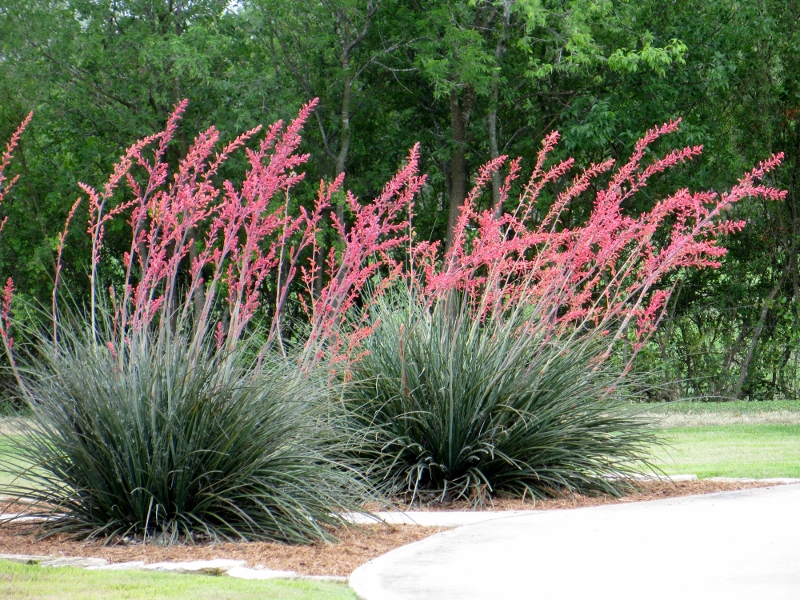
Hesperaloe parviflora - Red Flowered Yucca
Zone: 5-10

Purchase from: Accents for Home and Garden, Almost Eden Plants, Annie's Magic Garden, Dancing Oaks Nursery, Eldon Tropicals's, High Country Gardens, J.L. Hudson Seedsman, Lazy S'S Farm, Niche Gardens, Smart Seeds, Sooner Plant Farm


Penstemon pinifolius - Pineleaf Penstemon
Zone: 5-8

High country gardens has selected several cultivars of this species for both color (ranging from a a clear yellow to deep red) and height.
Purchase from: Annie's Annuals and Perennials, Forestfarm, Gardens in the Wood of Grassy Creek, High Country Gardens, Joy Creek Nursery


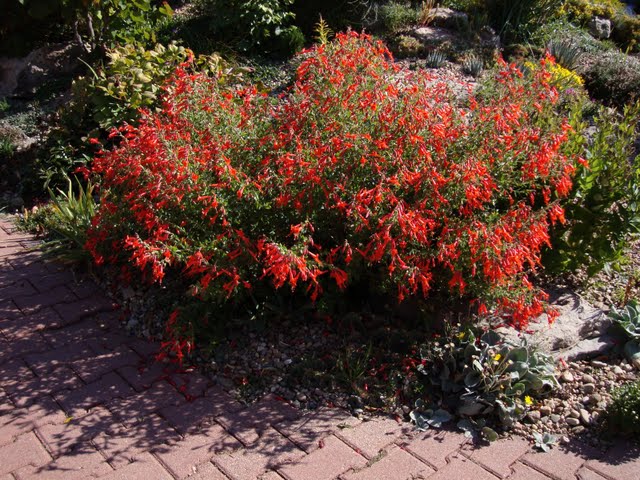
Zauschneria spp. (arizonica/garrettii) - Hardy Hummingbird Trumpet
Zone: 5-9

Z. arizonica, syn. Z. latifolia var. arizonica
Purchase from: Forestfarm, High Country Gardens
Z. arizonica syn. Z. canum subsp. garrettii
Purchase from: High Country Gardens, Joy Creek Nursery, Romence Gardens

IMAGE SOURCES: MATRIX-PATCH HABITAT, A. CANADENSIS, A. TUBEROSA, I. LINARIFOLIA, O. HUMIFUSA, I. RUBRA, M. VIRGINICA, A. RUPESTRIS, C. INTEGRA, H. PARVIFLORA, P. PINIFOLIUS, Z. ARIZONICA

Wednesday, February 25, 2015

THE CLAY CURSE


The clay dichotomy - when soils with high clay content become wet the become almost moldable, where as on the other end of the spectrum they form large, rock hard macro clods.


Over my few limited years of gardening there is a certain common phrase I've grown to hate.... "average, well drained soil." This seems to be what 90% of the popular garden plants available seem to require, yet it is the furthest thing away from the soils I've had the "pleasure" of gardening in. When I first started buying plants I was painfully oblivious that in most cases clay is a very, VERY dirty word when it comes to soil (get it, dirty... soil?, sooo clever) and means certain doom for many of the the beauties that I drooled over in plant cataolgues (Stewartia, Rhododendron, Kalmia, Cladrastis, Caryopteris, Agastache, Nepeta, Penstemon, Bearded Iris, Salvia, Heuchera, and the list goes on and on and on...). I've gradually come to accept my fate... after years of ripping out sad suffocating vestiges of what I thought would become vigorous, beautiful specimens.

Despite the impression I might be giving the problem with clay soils (or in my case pretty much just clay) is not fertility, but rather a size problem. Yes, a SIZE problem (insert joke here). The particles are so small and so tightly packed that there is virtually no room for air pockets, which means no oxygen for roots. To make matters worse any amount of disturbance (for example foot traffic from well meaning weeders) usually only compounds the problem and if you add in some occasional vehicular activity when the soil is wet and compaction may get to the point where the soil simply becomes too dense for roots too penetrate (another reason why I hate big clunky mowers). Clay soils also have an interesting dichotomy (particularly here in the east) where they go from being nearly completely saturated with water for 3/4 of the year (again depleting whatever small amounts of available oxygen there might be) to almost hydrophobic during the hotter drier months of the summer. The Missouri Botanic Garden has on excellent primer on clay soils as well as a few short lists of plants that can grow in them, but the long and short of it is clay soils make most garden plants sad. Very sad.

While I'd like to say that I've gotten to the point where I'm totally accepting of my native clayey soils, I'm not there quite yet. The plants that tend to gravitate towards clay tend to be, to put it mildly, a rather coarse, overbearing, and exuberant bunch, and by the time mid-summer rolls around, when left to their own devices, can form a riotous mess of plants both lanky and disheveled (I might be over-generalizing just a bit.... and as a general disclaimer my view point may be slightly tainted by years of being bombarded with images of scrumptious plants that I will never be able to grow). I was reminded all to well of this clay induced rambunctiousness after considering it in contrast to a winter trip to the back dunes of Cape Cod (this was before much of eastern mass was under several feet of snow). There is something about the sterile sandy soils of the cape that demands a decidedly austere simplicity of the plants that prefer it.


Pitch Pine (Pinus rigida) along with Scrub Oak (Quercus ilicifolia), not pictured, form the dominant woody vegetation in the back dunes of Cape Cod. Here, C. pennsylvanica blends with the fallen pine needles to form a spongy carpet

Pinus rigida - Pitch Pine
Zone: 4-7

Purchase from: New England Wetland Plants, Edge of the Woods Native Plant Nursery, American Native Nursery, ArcheWild Native Nurseries

Carex pennsylvanica - Pennsylvania Sedge, Oak Sedge
Zone: 4-7, although I've seen plenty of 3-8

Purchase from: Classy Groundcovers, Everwilde Farms, Greenwood Nursery, Morning Sky Greenery, Prairie Nursery, Prairie Moon Nursery, Santa Rosa Gardens, Shooting Star Nursery, Yellow Springs Farm


The sterile soils of the back dunes cause F. grandifolia to grow to probably only 2/3 the height of what you would normally find in more nutrient rich habitats further inland. SIDE NOTE - If I ever happen to catch one of you idiots who feels the urge to carve into the trunks of these beautiful trees, RUN, because I will come after you!!!

Fagus grandifolia - American Beech
Zone: 3-9

Purchase from: Nearly Native Nursery, Cold Stream Farm, Forest Farm, Heritage Seedlings, Mail Order Natives

Dicranum ?scoparium? - Rock Cap Moss
Zone: no bleepin idea...

Purchase from: Moss Acres


Probably not the best photo of I. glabra (it's the only green plant material in this picture), but up to this point I had never seen this ubiquitous evergreen landscape shrub in its natural habitat.

Ilex glabra - Inkberry
Zone: 4-9

Purchase from: (Lots of different cultivars available from lots of different places, but if you look you can find straight species from a few places) Nearly Native Nursery, Yellow Springs Farm, New England Wetland Plants


When I've come across G. procumbens growing in more woodland-ish (humus rich) soils under the the shade of much larger trees further inland its always been fairly sporadic and patchy. Here in the sandy soils of the Cape with a bit more sun it grows as a luxuriant and continuous groundcover that could even give Pachysandra a run for its money. Many native ericaceous plants, like legumes, have very strong mycorrhizal relationships that allow them to grow vigorously in soils of very limited fertility. Sometimes fertility can actually impede the growth of such plants.

Gaultheria procumbens - Wintergreen, Eastern Teaberry
Zone: 3-8

Purchase from: Accents for Home and Garden, American Meadows, Forest Farm, Garden in the Wood of Grassy Creek, Lazy S'S Farm, Romence Gardens, Sooner Plant Farm, Heritage Seedlings


When the soil profile of this area was exposed it was easy to see that organic matter made only a small thin veneer over a monolithic layer of almost pure sand below.

You may be asking yourself why I'm showing images of sand loving plants when I'm talking about clay soils. If nothing else, seeing this compelling landscape in person (granted for the most part undisturbed by people) brought home the fact that soils come first, then the plants, not the other way around. It may be hard to resist the seductive hybrids and cultivars that the horticultural industry peddles incessantly, but if you ever hope to have a landscape that is at at the very least some what self-sustaining, do your due diligence. Get outside in your yard and dig around a bit, hell, go and get your soil tested. I mean you could always try it my way or you could avoid the years of soil amending, wasted money, plant heartbreak, and residual horticultural bitterness and simply accept the hand you were dealt. I suggest the latter.