Monday, February 29, 2016

LANDSCAPES OF NOTHING


Scenes from my daily commute. From left to right: Echium vulgare & Festuca sp., Verbascum thapsus, and Asclepias syriaca. These images give me pause about the value of landscape archicture as a profession. More often then not the spaces I prefer are produced from unintentional happenstance as opposed to intentional circumstance. If these spaces are simply a byproduct of human activity and disturbance, why does it seem we have to work twice as hard and produce so much waste trying to make something half as good?

Internal clarity is not one of my strong suits. It is a very rare moment for me to have a singular thought that doesn't immediately veer off into a series of tangents that send me careening down a road where I not only have no idea where I'm headed, but also have no way of steering the car. This is what made a particular instance from what is now several years ago so memorable. I was in between classes and a friend was telling me about an elective she was taking called "the architecture of nothing." Rather than my mind doing its normal thing and spiraling completely out of control, I just sat there for a moment to chew over the name for a bit... "the architecture of nothing?"... As with most things that seem to be heavy with meaning I decided it was A.) something either brilliantly profound or B.) absolute bullshit. Either way it was this very brief conversation about the class and its ideas that ultimate framed how I view the profession (landscape architecture) and its practice.

The truth is that the course probably was more bullshit than brilliantly profound (hell, the majority of my higher education was looking back), but nonetheless, the conversation it encouraged between me and my friend lead me down the path that would eventually provide me with a sincere appreciation for not only a minimal aesthetic, but the idea that the most skilled designers leave very little trace of their work. Whether undetectable all together or deceivingly simple, the most dynamic designs often take this approach not only when it comes to looks, but make it integral to nearly every part of the project; minimal disturbance, minimal impacts, minimal maintenance, etc. Unfortunately, those that only reflect this in the end product often go in the opposite direction as far as impacts and inputs over the long term. So while producing true "landscapes of nothing" can be overly complex, the plant selection doesn't have to be. While contextualization and specificity are always priority number one (generalization is always the enemy of good design), the following list captures this minimalistic spirit (at least in the northeast) in both aesthetic and temperament. Unfortunately, most of these plants go largely unnoticed in places that people overlook or simply don't care to look at.


SHRUBS:


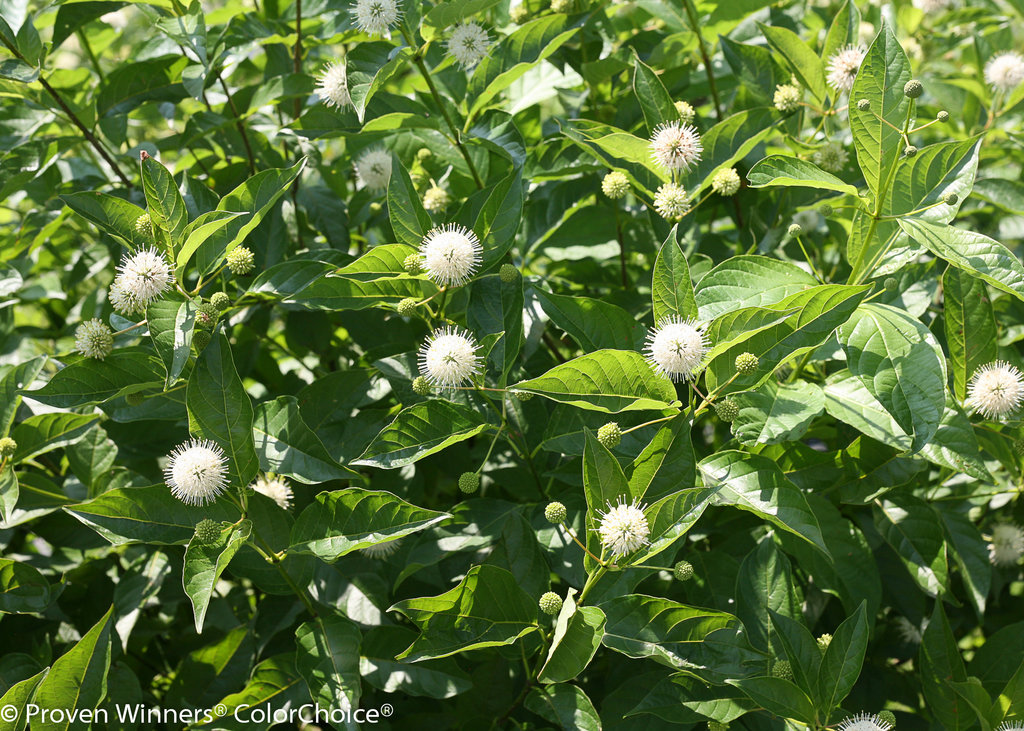
Cephalanthus occidentalis - Buttonbush
Zones (4)5-10
This underutilized very wide ranging native shrub may not garner much attention in its boggy haunts, but provided a soil that doesn't dry out (can take standing water as well) and a bit-o-sun it performs admirably. Never a standout, but a great filler. Lustrous dark green foliage when grown well. Cultivars include 'Sputnik,'Sugar Shack,' and 'Moonlight Fantasy.'
Purchase from: Prairie Moon Nursery, Pine Lands Nursery, Ion Exchange, Possibility Place, Rare Find Nursery, Cold Stream Farm, Niche Gardens, Long Island Natives, Toadshade, White Oak Nursery, Vincent Gardens, Almost Eden


Comptonia peregrina - Sweet Fern
Zones 2-6(7)
My dad seemed to be constantly tearing bits of this plant for my sister and I to smell when we were kids, and may have been one of the first plants I learned to recognize. A colonizing nitrogen fixer fond of acidic sterile soils.
Purchase from: Possibility Place, Pinelands Nursery Prairie Nursery, Rare Find Nursery, Pleasant Run, Forest Farm


Dirca palustirs - Leatherwood
Zones (3)4-9
Rather common in the literature, but uncommon in the trade. A rather squat and sturdy shrub, that's perfectly content in wet shade. pH adabtable. Flowers not quite as showy, but similar to Spicebush (L. benzoin). In all honesty the form reminds me a lot of Euonymus alatus but with a bit more character.
Purchase from: Prairie Moon, Broken Arrow, E.C. Brown's Nursery, Rare Find Nursery, Reeseville Ridge, Easy Wildflowers


Rhus typhina - Staghorn Sumac
Zones (3)4-8
A native species long appreciated in Europe for its ornamental attributes, only recently fully appreciated here in the US. Anyone in the northeast that has ever driven any major highway outside of the city probably knows this plant (even if they don't know its name). Unparalleled fall color. Soil and pH adaptable. Cultivars include 'Dissecta,' 'Laciniata,' and 'Tiger Eyes.'
Purchase from: Forest Farm, Cold Stream Farm, New England Wetland Plants, Sooner Plant Farm, Toadshade, Pinelands Nursery, Possibility Place Nursery, Urban Tree Farm


Xanthorhiza simplicissima - Yellowroot
Zones 3-9
One of the most adaptable shrubs in our flora, seemingly tailor-made for massing in trouble spots. Will grow well in most conditions provided the pH isn't too high.
Purchase from: Quackin Grass Nursery, American Beauties, Forest Farm, Pleasant Run Nursery, Van Berkum Nursery


HERBACEOUS PERENNIALS:


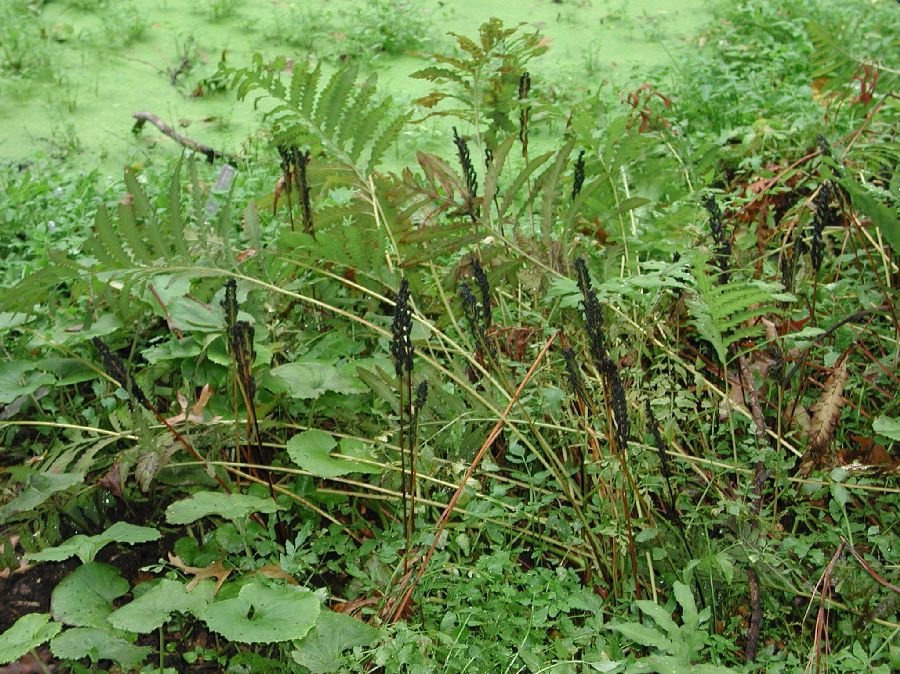
Onoclea sensibilis - Sensitive Fern
Zones 3-9
One of the easiest ferns to identify and perhaps one of the easiest to grow (provided it has moisture). A bit aggressive if happy.
Purchase from: Prairie Nursery, Possibility Place, Pinelands Nursery, Catskill Nursery, Prairie Moon, New England Wetland Plants, Long Island Natives, Lazy S'S Farm, Toadshade Farm, Yellow Springs Farm


Schizachyrium scoparium - Little Bluestem
Zones 3-9
I become more enamored with this wide ranging warm season grass with each passing year. The only season it comes up short is spring, otherwise a great performer through summer, fall, and winter. One of the few grasses that refuses to be flattened by heavy snows. Amazingly resilient and adaptable. A huge number of cultivars with most emphasizing blue variants and upright forms.
Purchase from: Prairie Nursery, North Creek, Bluestone Perennials, Plant Delights, Prairie Moon, Avant Gardens, Rare Find, Digging Dog, Possibility Place, American Meadows, Everwilde Farms, Toadshade


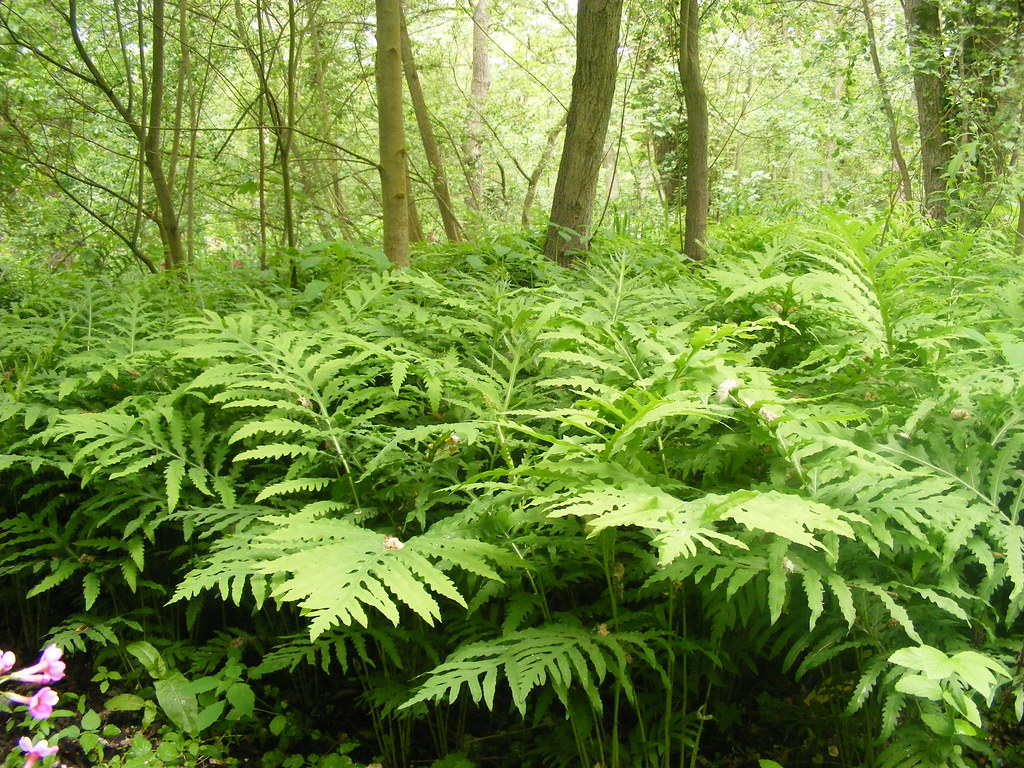
Symplocarpus foetidus - Skunk Cabbage
Zone: 3-7

Seemingly out of place in the swamps and lowlands of the northeast. S. foetidus seems far too exotic and primordial for the reserved New England, yet it is a staple of our early spring floral chorus. Needs a wet soil to grow well. Will not tolerate any amount of dryness.
Purchase from: Amanda's Garden, Far Reaches Farm, Lazy S'S Farm

IMAGE SOURCES: C. occidentalis (left, right); D. palustris (left, right); X. simplicissima (left, right); O. sensibilis (left, right); S. foetidus (left, right)

Sunday, January 31, 2016

NEW YEARS RESOLUTIONS.... AND OTHER, NOT ENTIRELY STUPID THINGS


I often have to remind myself that I need to fight the urge to go negative.

I.e., I could go on and on about the sheer stupidity of new year's resolutions. About how, if something was truly important, chances are that you wouldn't wait to have it coincide with an arbitrary date on the calendar. But I'm not gonna do that. I'm going to see past the scroogey fog that permeates far too many of my thoughts, and embrace my inner optimist (I think he's in there... somewhere... probably balled up in a fetal position). After all, to set a goal you need to start somewhere. Why not January 1st? And so I join you, middle aged, out of shape housewife, who will sign an overly priced gym contract only to stop going by the second week in January, and you, overworked office drone, who will try to find some sort of work-life balance only to be immediately slammed with an unrealistic deadline. I see your mediocrity and unrealistic goals, and I raise you some plain old low-baring pragmatism. And not to out do myself, but I've decided to go with not one, but two very, very low bars: 1.) Limiting the plant bullshit (aka meaningless terms that have zero value when not used contextually) and 2.) stop prescribing over-simplistic binaries and outdated ideologies to every situation regardless of (here it comes again)... context.


A typical successional field in the northeast. Despite many non-native species that invade old agricultural lands being classified as invasive (as, indeed, most of them are), an open field is not a naturally occurring condition in northeast. Just as the habitat itself is artificially created, there is a small percentage of these exotic species that are just as equally "artificially" classified as invasive, as they simply can not persist in a "naturally" occurring woodland.


low bar #1: LIMITING THE PLANT BULLSHIT
I've gotten pretty tired of the word "native." It gives the not so convincing illusion of being specific while actually doing the opposite. So obviously, my profession (landscape architecture), is all over it. It's verbiage heroine and we just can't seem to get enough. We sprinkle it liberally whenever discussing plant selection to try to convince our less informed clients that we actually know what we're talking about. The word, when not applied specifically, is so general as to be meaningless. It creates a false sense of value that can, and often is, misleading. So not only will I do my best to avoid this word in the future, but when I do feel the urge to use, I plan on getting my fix by swapping it out with "endemic" instead. "Endemic", unlike "native" not only implies, but often requires a specificity that leaves less room for the BS. I'm hoping I can quit the habit... We'll see.

low bar #2: STOP SUBSCRIBING TO OVER-SIMPLISTIC BINARIES AND IDEOLOGIES. THERE ARE NO BAD PLANTS, JUST STUPID, SUPERFICIAL, SHORT SIGHTED PEOPLE.
People like to, uuuum... ?peoplefy? things that have no business being, uuuum... ?peoplefied?. We seem to have a problem as a species dumping our emotional baggage onto everything we possibly can, even when its totally unwarranted and nonsensical. Not only does this mask the actual issues that they're mixed up in, but always makes dealing with them that much more complicated. If one can ever actually dig through all the layers of emotion we've ever so diligently flung into the plant world and contextualize each individual species (where did the plant come from?, where is it being planted?, and what history does it have in the area?) and look at them through a functional lens (what niche does this plant occupy in its natural habitat?, what niche could it occupy in local surrounding habitats? how likely is it to persist in surrounding habitats?, and what potential does it have to disrupt local ecosystems?) then suddenly making decisions becomes a lot easier.

These 2 goals should not be misconstrued as providing an excuse to be horticulturally negligent, simply a recognition that painting everything with the same broad strokes never turns out well in the long run. When you can plant locally endemic (see that... already with the follow through) species, you should, but when you can't, just be sensible about it.


IMAGE SOURCE: LEFT, RIGHT


The unfortunate reality is, particularly in my neck of the totally mixed up woods, is that since the first european settlement the entire ecology of the region has been entirely reformulated. Nearly every square inch of my state has, at one time or another, had a human hand up in it. Plants have been cleared, burned, introduced, re-introduced, disturbed, managed, and all around jumbled up. My point being is that the proverbial cat has long been out of the bag, so we should at the very least acknowledge that in the language we use to discuss related issues.

So to recognize this fact and to show my commitment to both of my goals I figured I'd make a list of a few of the naturalized, non-native *gasp* weedy species that have endeared themselves to me over the years and embedded themselves into the fabric of the landscape of where I live and grew up. In my region (northeast MA/southern NH... again context) these plants have found relatively benign niches in the neglected and disturbed places where others dare tread. Many of these "exotics" have been here for a few hundred years at least and have seem to have merged fairly harmoniously in the messy matrix of human dependent habitats that now dominate the landscape.


Cichorium intybus - Common Chicory
Zones 4-9
The commonality of this plant never seems to detract from the sky blue hues of the flowers. The only downside is the flowers wilt and collapse by mid-day.
Purchase from: American Meadows, Everwilde Farms, Pantry Garden Herbs, Outside Pride, Victory Seeds, Dreer Creek Seed, Seed Corner


Echium vulgare - Viper's Bugloss or Blueweed
Zones 4-8
Another common plant with uncommonly blue flowers. Unlike chicory, it won't tolerate clay. A lover of dry sterile soil.
Purchase from: Seedaholic, Plant World Seeds, Ebay


Lychnis flos-cuculi - Ragged Robin
Zones 4(3)-9
Perhaps the most beautiful (and well behaved) of all the plants that have naturalized in the northeast. The individual flowers look a bit like a snowflakes, and the plants in mass have a beautiful frothy look about them. Pink is the default, but if you want to take full advantage of the snowflakey look, white forms (L. flos-cuculi 'Alba') are offered as well.
Purchase from: Plant World Seeds, The Thyme Garden Herb Company


Ranunculus acris - Tall Buttercup
Zones 4-8
There might be some of you out there who don't think the lowly buttercup is worth much of a mention, but despite continually weeding it from oh so many a garden, its flowers never fail to give my mood a little boost. The lowly plant has followed people around long enough for there to be a few cultivars making the rounds. I recently discovered 'Citrinus', pictured above.
Purchase from: Plant World Seeds, Jelitto


Vicia cracca - Bird Vetch or Cow Vetch
Zones 4-8
An exuberant herbaceous perennial vine. Spreads aggresively via underground runners. Very similar to Hairy Vetch (Vicia villosa) but grows in a much wider range of soils.
Purchase from: Bonanza


IMAGE SOURCES: L. flos-cuculi (LEFT, RIGHT); R. acris (LEFT, RIGHT)

Thursday, December 31, 2015

WINTER'S TRUTH


My garden (still under construction) in December sans snow and ice with our current subtropical winter.


There are very few things in life I am certain of, all of which I can count on my fingers.

1. Forced social situations make me wish I had the ability to blend into walls (and while I have tried, I have been largely unsuccessful).
2. Nothing is better than a good nap. NOTHING!!!
3. I will always be at least 5 minutes late for everything no matter how hard I try to be on time.
4. Sometimes people suck. Sometimes people are awesome.
5. My garden's days are numbered.


Sooooo I'm pretty well aware of all these things year round, but the last item becomes particularly evident during this time of year. Bare branches, flattened stems, and slowly disintegrating clumps somehow seem much less permanent then when they were actively growing. Not only does their dormancy invoke more of a transiency, but the subdued tones and textures have a way of revealing the natural forces that not only shape seasonal patterns, but the surrounding landscape itself.

Although, it's not just these larger forces of change that reveal themselves during the colder months. Smaller, more subtler details that are otherwise obscured during the growing season become apparent as well. In the case of the property where I garden (that has essentially gone from abandoned agricultural field to forest in the last 30 years) I can see the continual succession and regeneration of the forest itself.


Fagus grandifolia, American Beech. As the forest matures this species is slowly but surely reclaiming the land it lost perhaps centuries before.


My point being in all this blathering (and getting back to why all this is relevant to the fifth item on my list) is that the winter showcases change as the ruthless, incessant, and unstoppable force it always has been and always will be. Nothing, however seemingly stagnant or enduring, is forever. This obviously applies to all things, gardens included.

This fact is particularly relevant to me, given where my garden ended up. While undeniably beautiful, the landscape that provides the expansive scenic backdrop will inevitably be the source of its destruction. On a daily basis the neighboring salt marsh is at least semi-flooded by the tidal pulses of the Atlantic, even more so on spring tides, and again, even more so when we have astronomical tides. Couple this with a powerful storm, like, for example, a hurricane that we're way past due for in the Boston area, and it's all over. The best I can hope for is it happens latter in the season when at least some of the plants are partially dormant and the salt damage will be minimized a bit. I know it's only a matter of time before the worst case scenario becomes a reality, I'm just hoping its a little further down the pipeline than what I'm expecting.


Tidal Ebb. These two images were taken on the same day, a few hours apart.


SALT (SALINE SOIL) TOLERANT PERENNIALS:
In a feeble attempt to accept my briney fate, I figured I'd look at a few of the more salt tolerant species we have in our flora. While none of these plants (with perhaps the exception of L. carolinianum) are able to withstand the full salinity of ocean water, they would at least have a fighting chance of making it through a major (but temporary) storm event. Unfortunately, many of the diverse flowering species that favor brackish waters of the upper marsh are being displaced at an alarming pace by Common Reed (Phragmites australis) without any sign of slowing. The lists below does not include either rushes or grasses which are some of the most salt tolerant plants we have. For a more complete list of salt tolerant herbaceous species check out this excellent diagrammatic list put out by Norfolk's (VA) Bureau of Environmental Services.


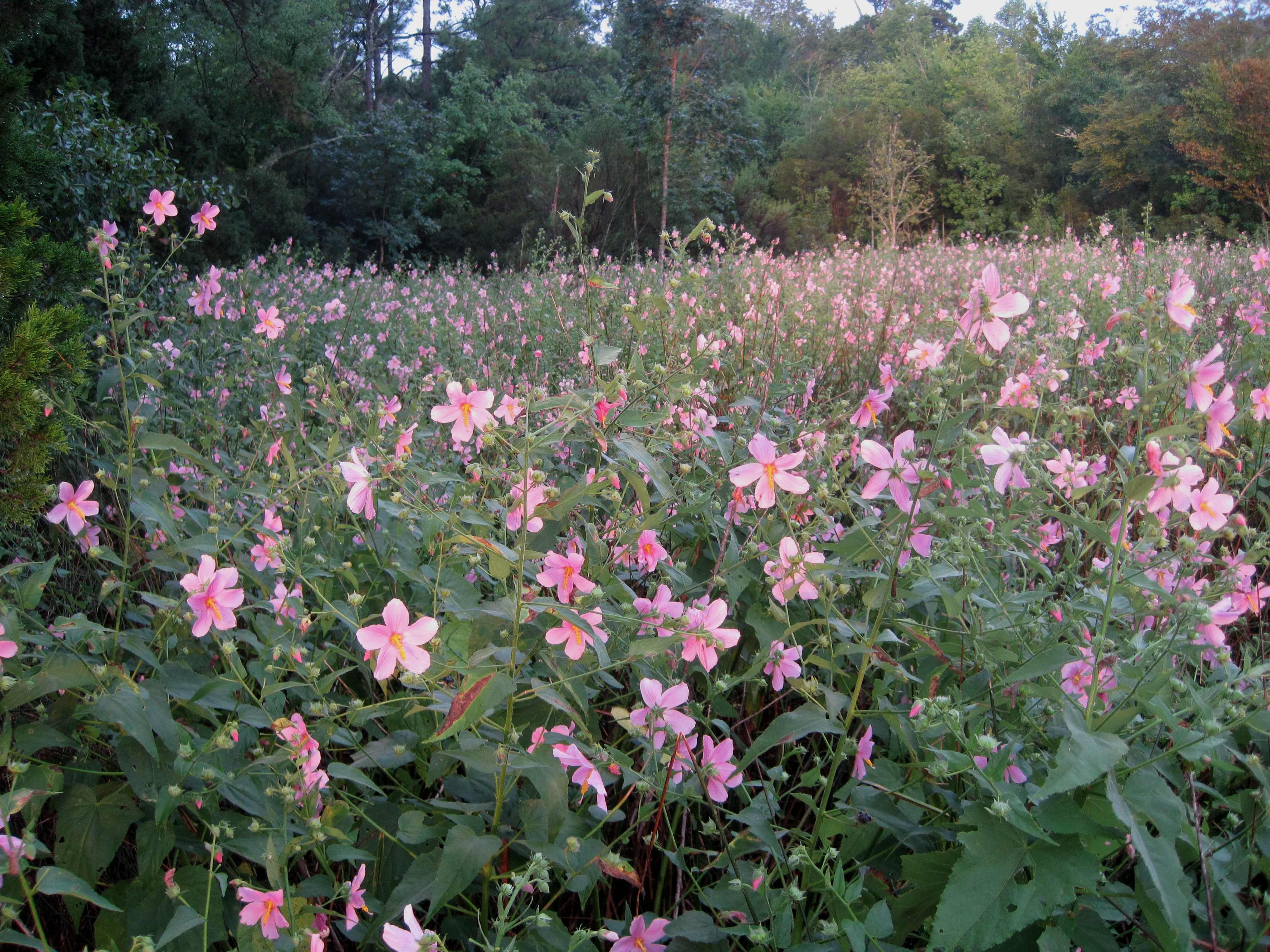
Hibiscus moscheutos - Swamp Rose Mallow
Zones 4-9

I have a soft spot for the softer pink, eyeless forms usually associated with the subspecies Hibiscus moscheutos ssp. palustris.
Purchase from: Prairie Nursery, Rare Find Nursery, Glover Perennials, Possibility Place, Agrecol


Hymenocallis occidentalis var. occidentalis Synonym: H. caroliniana - Northern Spider Lily
Zones 5-?(the literature is all over the place with this one, have seen 8,9, and 10)
I'm still in the process of getting a handle on this southeastern genus, and while I can't speak to the salinity tolerance of H. occidentalis there are multiple subtropical and tropical species that are highly salt tolerant (H. latifolia is often found growing in the company of mangroves in the coasts of Florida, Mexico, and the West Indies). I'm wishfully hoping that this trait is still at least partially present in some of the more cold hardy members of the genus, like H. occidentalis.
Purchase from: Missouri Wildflower Nursery, Niche Gardens, Sunshine Farm and Gardens


Iris prismatica - Slender Blue Flag Iris
Zones 3-9

One of our few native irises tolerant of saline soils. On the smaller side (to 2') and perfectly suited to average garden conditions (can be a bit wide ranging though). There are 2 other species that are tolerant of salt spray (I. hookeri and I. setosa), but I couldn't find any literature supporting their tolerance to saline soils and neither can tolerate the hotter summers you find south of zone 7.
Purchase from: Plant Delights Nursery, Plant Delights Nursery, Nearly Native Nursery, Morning Sky Greenery, Toadshade Wildflower Farm, Gardens In the Wood of Grassy Greek, Edelweiss Perennials


Kosteletzkya virginica syn. K. pentacarpos - Seashore Mallow
Zones (6)7-9

A significantly less hardy, slightly less coarse version of Swamp Rose Mallow, perhaps a bit more salt tolerant. This guy was killed outright in my zone 6a garden, so if you're attempting to grow it north of zone 7, make sure the source plant material is coming from more northerly populations within its range.
Purchase from: Plant Delights Nursery, Environmental Concerns, Niche Gardens, Niche Gardens, Earth First Natives, Almost Eden, Mulberry Woods Nursery, Bryan and Sons


Limonium carolinianum syn. L. nashii - Sea Lavender
Zones 3-9

Perhaps the most salt tolerant flowering species in the northeast. While found growing in wet soils in the wild, in cultivation (sans salty water) it requires good drainage.
Purchase from: Rare Find Nursery, Earth Tones Natives


Sabatia kennedyana - Plymouth Gentian
Zones 4-9, although have seen multiple sources that list this hardy only to zone 7

There's is a closely related, very similar looking and adapted plant S. dodecandra that is equally worth growing. I have included sources for this plant as well below.
Purchase from: Plant Delights Nursery, Niche Gardens, Mellow Marsh Farm, Plant Delights Nursery, Niche Gardens


Symphyotrichum tenuifolium - Perennial Salt-marsh Aster
Zones ?4-9?

Purchase from: Southern Branch Nursery


SALT (SALINE SOIL) TOLERANT TREES:
In the northeast it might be pushing it a bit to call any tree "salt tolerant" and none would probably even come close to even the least tolerant herbaceous species above, but these guys are ultimately as good as it gets. Again none of these species would be able to survive anywhere near the mean hightide line, the idea is simply that they might have more of chance of surviving a major storm event. For a more complete picture, check out this list put out by the Virginia Cooperative Extension.


Amelanchier canadensis - Canada Serviceberry
Zones 4-8
Purchase from: Accents for Home and Garden, Cold Stream Farm, Greenwood Nursery, New England Wetland PLants, Prairie Moon Nursery


Chionanthus virginicus - Fringetree
Zones (4)5-9, although have seen many 3-9
Purchase from: A Nearly Native Nursery, Almost Eden Plants, Forestfarm, Gardensoyvey, Lazy S'S Farm, Niche Gardens, Plant and Gnome, Shady Gardens Nursery, Sooner Plant Farm, Tree Seeds, Vincent Gardens, White Oak Nursery, Nasami Farm


Diospyros virginiana - Common Persimmon
Zones 4-9
Purchase from: A Nearly Native Nursery, Forest Farm, Greenwood Nursery, New England Wetland PLants, Tree Seeds, White Oak Nursery


Juglans nigra - Black Walnut
Zones 4-9

While not exceptionally salt tolerant I consistently find this species growing at the edge of the salt marsh, closer than any other surrounding species.
Purchase from: Cold Stream Farm, Forest Farm, Plant and Gnome, Idaho Forest Research Nursery


Juniperus virginiana - Eastern Red-cedar
Zones 3-9, although have seen everything from 2-9 to 4-9

Despite being common, a very (and perhaps overly so) adaptable evergreen tree.
Purchase from: A Nearly Native Nursery, Purchase this from Cold Stream Farm, Forest Farm, Toadshade Wildflower Farm, Tree Seeds, White Oak Nursery, Environmental Concerns


Magnolia virginiana - Sweetbay Magnolia
Zones 5-9
Purchase from: Beaver Creek, Briggs Forest Farm, Kelly Nursery, Gardensoyvey, Pleasant Run, Sooner Plant Farm, Southeastern Natives, Spring Meadow, Tankard Nurseries, Environmental Concerns


Taxodium distichum - Baldcypress
Zones 4-10

Arguably one of the most unique and adaptable trees in our flora (although the furthest northern extent of its range is Delaware, so technically outside of the northeast) and our only truly aquatic tree. In all likelihood perhaps the most salt tolerant of all temperate trees, there is ongoing work to increase this species salinity tolerance.
Purchase from:Nearly Native Nursery, Boyd Nursery, Cold Stream Farm, Conifer Kingdom, Lazy S'S Farm, Plant and Gnome, Rarexoticseeds, Sooner Plant Farm, Environmental Concerns


IMAGE SOURCES: H. moscheutos (LEFT, RIGHT); H. occidentalis (LEFT, RIGHT); K. virginica (LEFT, RIGHT); L. carolinianum (LEFT, RIGHT); S. kennedyana (LEFT, RIGHT); S. tenuifolium (LEFT, RIGHT); C. virginicus (LEFT, RIGHT); D. virginiana (LEFT, RIGHT); J. nigra (LEFT, RIGHT); J. virginiana (LEFT, RIGHT); M. virginiana (LEFT, RIGHT); T. distichum (LEFT, RIGHT)