Wednesday, September 30, 2015

APPPLES BE SLUTTY


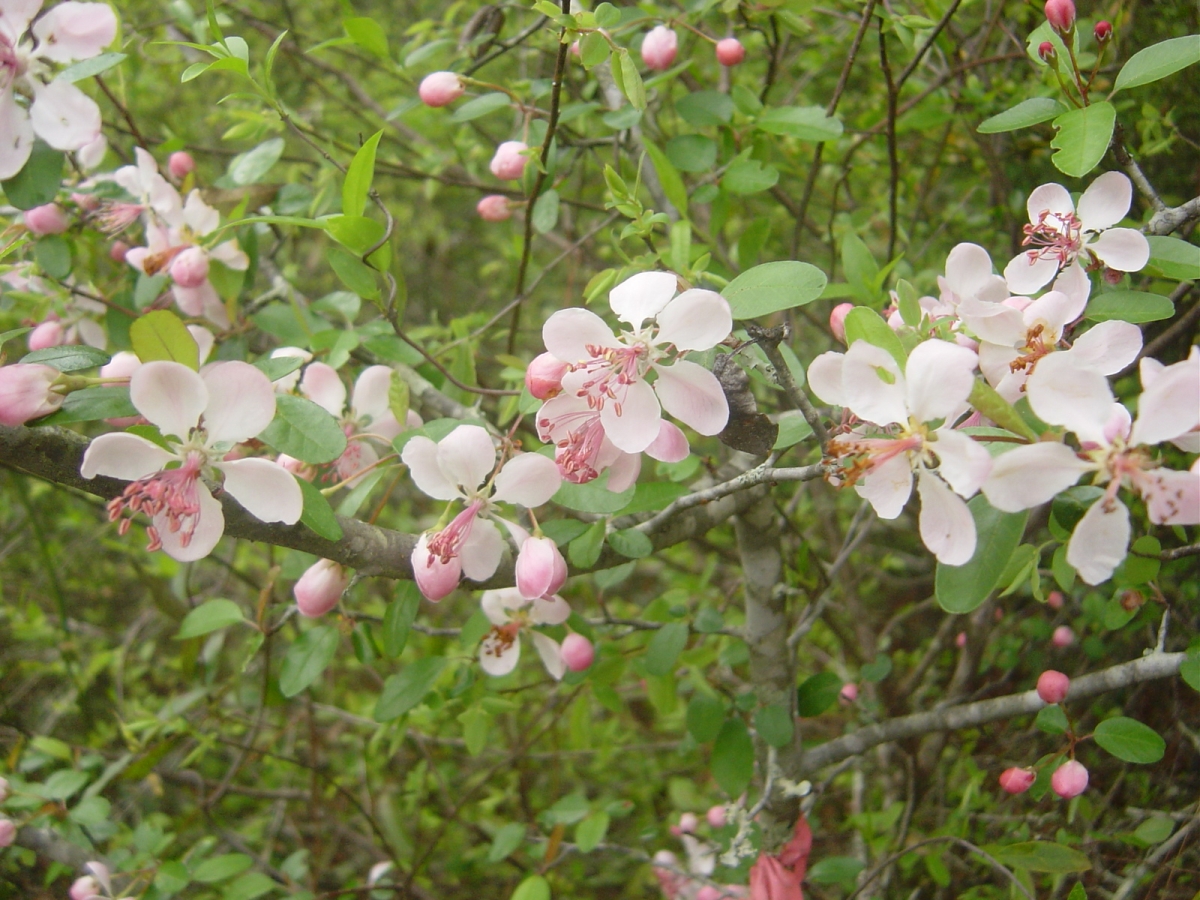
A brief 15 minute sampling of wild crabapples growing at the property where I garden.

Now that apple picking season is upon us I think it's time someone stepped up to the plate and called out the darlings of autumn as the slutty ho-bags (I checked the urban dictionary, and yes, its hyphenated) they truly are... Jk. Kind of.

The genus Malus (to which all apples belong) is notoriously promiscuous and will produce fertile offspring with nearly any other individual, regardless of species. This indiscriminate reproductive attitude lends apples not only an amazing adaptability, but a crazy amount of phenotypic diversity that boggles the mind. My state (MA) has no endemic species (at least as far back as the last ice age anyway). The closest North American native Malus is M. coronaria (Sweet Crabapple) with a range centered in the southern Great Lakes region and only extending as far east as New York. Yet, go to any abandoned field in the northeast and you're bound to find at least a few "wild" apples growing happily amongst the usual palette of successive species (the property where I garden being no exception). After doing a little crabapple recon for about 15 minutes I was able to find 5 trees of drastically different shapes and sizes with the fruit to match; Reds and yellows, shiny and dull, large and small... Keep in mind this was without even trying to find contrasting individuals, simply no 2 were alike.


Various Malus on the property. In addition to fruit and tree habbit, leaf shape and size also showed a huge amount of variability. Some looked exactly like those you'd find on orchard trees (sans lobes and kind of large) and others looking very much like those of Hawthorn (multiple lobes and kind of small).


Crabby bounty.


Our centuries old love affair with apples in the northeast has given rise to what I've affectionately referred to in previous posts as Malus x intermedia, a genetic conglomeration of at least 6 contributioning species (probably more) from around the globe including M. sylvestris, M. hupehensis, M. pumila, M. sargentii, M. ioensis, M. sieboldii, and maybe a bit of M. coronaria as well. While these small trees have the potential to displace other flowering natives like Amelanchier, in their defense they are not particularly aggressive and have quite a bit of ecological/wildlife value. Despite the trees status as a foreign invader, it's a bit mind-blowing to consider the future of this interspecific mess as it continues to grow and evolve in the region. Will it maintain it's diversity of forms and shapes as new genetics are continually added into the gene pool or will certain traits win out as the ?species? competes for real estate in its "new" environment. While these scenarios will be playing out long after I'm gone, its awe-inspiring to consider I might be witnessing the birth of a new, unique species.

With that said, the promiscuity and fertility that characterizes the genus (while superficially appearing to be a good thing) can actually endanger the genetic integrity of existing native populations. While this may be an over simplistic summation, when foreign, perhaps deleterious genes, are continually pumped into a given discrete population it would only make sense that the overall fitness of individuals within the population would be negatively affected. This would ultimately affect the adaptations that allow the trees to cope with location specific environmental stresses that the species has been adapting to for thousands and thousands of years. So if you are in fact lucky enough to live in areas that has native apples, try your hand at preserving what little genetic integrity remains by planting a native Malus of your own. Be aware, however, that our native apples have pretty much no resistance to cedar apple rust, and while they will grow regardless, if you live in an area with eastern red cedar expect the trees to be mostly defoliated by the end of the season. And as one final disclaimer, don't expect the garish colors you are used to seeing at the grocery store. The fruits of our 4 native species pretty much peak at a dull yellowish green when ripe (although M. fusca does take on muted red and burgundy tones). Ok, now that I have thoroughly dampened whatever enthusiasm you might have for growing these natives, here ya go...


Malus angustifolia - Southern Crabapple
Zones (5)6-9
Purchase from: Foggy Mountain Nursery, Hidden Savanna Nursery, Just Fruits and Exotics, Nearly Native Nursery, Mail Order Natives, Vincent Gardens, Woodlanders


Malus coronaria - Sweet Crabapple
Zones 4-8
Purchase from: Alpha Nurseries, Cold Stream Farm, Forest Farm, Nurserymen.com


Malus fusca - Pacific Crabapple
Zones 5-8
Purchase from: Burnt Ridge Nursery, Forest Farm, Las Pilitas Nursery, Lawyer Nursery


Malus ioensis - Prairie Crabapple
Zones 4-8
While this native has lots of cultivars in the trade (mainly double flowered forms that are largely fruitless) the straight species is largely absent and rather difficult to locate.
Purchase from: Alpha Nursery, Sheffield's Seed Company

If you're on the market for something a bit flashier (and don't live in an area where you run the risk of corrupting the integrity of local native species) check out this lists put out by the Brooklyn Botanic Garden.

To summarize, embrace your inner whore and plant an apple. Or just plant an apple. That is all. :)

IMAGE SOURCES: M. angustifolia (flower, fruit), M. coronaria (flower, fruit), M. fusca (flower, fruit), M. ioensis (flower, fruit)

Monday, August 31, 2015

AUGUST LESSONS


There's something about August that forces one to pause... reflect... take stock. I'm not sure if it's the weather or the residual feelings that are ingrained in the subconscious of every former student, but somehow as the month begins to wain so to does the passage of time. By the last week of the month, the viscosity of life seems almost unbearable, suffocating even. It's no surprise that this time of year is the most challenging for a gardener (at least in my own limited experience).

At this point in the season all the garden's flaws seem to be front and center as most of the garden is in a not so graceful transitional phase, with many of the summer plants looking heat weary and worn, and the fall chorus still getting warmed up (or in this case cooled down). While fall still holds latent potential, much of the garden is past its prime and the sometimes harsh contrast between your own over-inflated expectations and the reality of what's in front of you can be a real downer. As unpleasant as this post summer reality might be, its an unavoidable, but necessary part of of having a garden. It prompts an efficiency and pragmatism that relentlessly pushes the design forward. This has been especially true of my recent endeavor, still in its infancy.

So rather than simply dwell on the negative, I thought I'd share some of my lessons by highlighting a few of the plants that surprised me... or will hopefully surprise me this year (both the good and the bad):


1. THOU SHALL KNOW THINE PLANT(S).


Liatris pyanostacha - Prairie Blazing Star
Zones 3-9
This is a great instance of not fully understanding a plant's unique qualities and attributes prior to using it in the garden, and then being dissapointed when the plant behaves exactly as it should. I had read repeatedly that this species of Liatris excelled in clay (which it obviously does). And of course, rather than investigating the plant any further, I immediately dropped the research part of getting to know the plant and left the rest up to my imagination. If I had actually followed up, even a little bit, I would have discovered that L. pyanostacha is the gangly monster of the genus. By the time they actually get around to flowering (at least in a heavier, fairly moist soil) the garden looks a bit like it's being invaded by a swarm of giant fuzzy purple caterpillars, creeping along the ground and on top of whatever poor neighbor they've happened to topple over on. Had I been a proper gardener and done my homework, I would have realized that when grown in a richer soil this species needs support from sturdier neighbors just as it does in it's prairie home (I'm gonna try interplanting it with either Boltonia asteroides, Agastache foeniculum, or Doellingeria umbellata. Haven't quite made up my mind just yet).
Purchase from: Agrecol, Almost Eden, Everwilde Farms, Forest Keeling, Hoffie Nursery, Ion Exchange, Lazy S'S Farm, Outback Nursery, Niche Gardens, Morning Sky Greenery, Prairie Moon, Prairie Nursery, Shooting Star Nursery, Spence Nursery

2. THOU SHALL PRESCRIBE TO A STRICT GARDENING DOGMA... THEN ACCEPT THAT ALL WHO ADHERE TO DOGMA OF ANY SORT ARE FOOLS AND FANATICS... BUT MAINLY JUST FOOLS.
There are 2 things I swore I'd never do: 1.) bother with any "non-indigenous" plants, and 2.) plant an annual. But, after dealing with voracious deer, water-logged clayey soil, salt, and biting winter winds howling off the Atlantic I've gone with a more "if it grows and doesn't get eaten I grow more of it" mentality. I might be over-simplifying just a bit, but I've been willing to bend my principles as of late (cautiously as always), but bend them none the less.


Salvia uliginosa - Bog Sage
Zones (6)7-10, surprisingly cold hardy for a Brazilian native
This tender perennial sage (that despite it's name, doesn't actually require a boggy soil) finally won me over with its long airy spires of true blue flowers. It's only been in the ground a little over a month now, but I'm already in love. At the very least (even if it doesn't come back) I'll be planting it in droves around the plants the deer favor, as it's pretty pungent, even for a sage. Pretty sure it would deter even the most determined of those perpetually munching herbivores.
Purchase from: Accents for Home and Garden, Avant Gardens, Colonial Creek Farm, Digging Dog, Gardens in the Wood of Grassy Creek, Joy Creek, Lazy S'S Farm, Plant Delights, Putnam Hill, Vincent Gardens


Salvia nutans - Nodding Sage
Zones 3-9. I've also seen a few 6-10, but given its natural range 3-9 is more likely.
Guess I'm just a softy for those damn sages (the deer resistant thing doesn't hurt either). I'll be planting a pair of these in the highest and driest part of the garden to see if they make it through the winter. If they live up to the hype and survive, the texture and movement this species simply can't be beat.
Purchase from: Flowers by the Sea

3. THOU SHALL EMBRACE SERENDIPITY, YET ALSO ACCEPT THINE HAND OF LADY REALITY WHILST SHE SLAPPEST THOU ACROSS THE FACE.

Doellingeria umbellata (syn. Aster umbellatus) - Flat-topped White Aster
Zones 3-8
I accidentally collected the seed of this species while attempting to collect both Symphyotrichum laeve and Symphyotrichum prenanthoides. As it turns out the deer love both S. laeve and S. prenanthoides, but seem to totally avoid Doellingeria umbellata. I've now planted this (previously unknown to me) aster in with the other 2 species to act as a deer deterrent. Not the showiest species, but pretty 'nough with clean dark green foliage all season to boot.
Purchase from: American Meadows, Everwilde Farms, Morning Sky Greenery, Prairie Moon

4. THOU SHALL BREATHE.

Magnolia virginiana - Sweetbay Magnolia
Zones 5-9
While Sweetbay Magnolia may be a rather ubiquitous small landscape tree south of New England, many of the more cold hardy cultivars have yet to be fully utilized up north. I've taken some initiative by taking cuttings of northern stock material given that the more cold hardy cultivars (mainly 'Henry Hicks', 'Ned's Northern Belle' and 'Moonglow' aka 'Jim Wilson') aren't readily available in the north (go figure). Despite almost losing everything at one point, I now have a least 4 rooted cuttings that I'll hopefully be harvesting seed off of in a few years to spread around the property and neighboring swamps.
Purchase from: Beaver Creek, Briggs Forest Farm, Kelly Nursery, Gardensoyvey, Pleasant Run, Sooner Plant Farm, Southeastern Natives, Spring Meadow, Tankard Nurseries

Monday, July 13, 2015

RASPBERRIES, LOTS AND LOTS OF RASPBERRIES


I'm not in denial anymore. I know the likelihood of any of my little breeding projects actually producing anything viable, never mind any individuals with some garden worthy traits is pretty damn unlikely. Commercial breeders grow thousands upon thousands of plants to find that one winning individual that ends up at your local garden center (or your local farmer's field). But since I'm by no means an expert I'll let you get a bit of a lesson from this enthusiastic terma-breeder (get it? like termninator, except breeder... cause of the German thing... its probably not a good sign when your own jokes make you sad).


As far as pure numbers go there's no way the home gardener can come anywhere's near close, unless you have your own personal working farm with lots and lots of cheap and over-educated labor (which there is actually a lot of these days... so maybe if you have some surplus land and some spare change you could give professional plant breeding a try). But as much as I'm finally being realistic as far as my own limitations are concerned (well kinda realistic-ish, at least compared to my usual standards), this doesn't mean I've lost faith in the potential of the plants I'm working with. On the contrary, while I might be deluding myself, I feel like what home breeders lack in numbers, they can make up for in strategic crosses, exploiting the untapped and under-appreciated diversity within the genus they're working with.

If anything I've only gotten more excited, particularly with the main group of plants I've started working with, Rubus spp., aka raspberries and blackberries. This group becomes even more relevant when you consider the current trend of "patio edibles" (compact plants that do double duty as both ornamentals and productive edibles for the home landscape). Aside from this cosmopolitan genus's general aggressiveness there are many species within this group that have traits that lend themselves really, really well to the garden, mainly relatively big rose-like flowers (to which family they belong), delicious fruit (that freezes really well and is the main component of most of my smoothies!!!), and at least semi-ornamental foliage. Thought I'd use this post to highlight several of the species I'm working with, as well as a few other that hold some untapped potential. Viva la RUBUS!!!


SHRUBBY RUBUS SPP.


Rubus deliciosus syn. Oreobatus deliciosus - Rocky Mountain Raspberry or Boulder Raspberry
Zones 5-9, although I was only able to find 2 sources and one of them said 3
This super showy western North American species has been largely overlooked by the horticultral industry in the states. But of course, as the UK generally does with our underappciated natives, has given the plant it's proper horticultural due by crossing it with a closely related Mexican species (R. trilobus) to produce a popular ornamental across the pond, Rubus x tridel 'Benenden'.
Purchase from: Forest Farm, Fort Collins Wholesale Nursery


Rubus odoratus - Flowering Raspberry
Zones 3-8
Still humming away underneath the radar, this is one of our native shrubs that deserves much wider use in those in between trouble spots, especially in the northeast. STOP USING RHODIES!!!! Use this instead.
Purchase from: Amanda's Garden, Forest Farm, Keeping it Green Nursery, Lazys's Farm, Long Island Natives, White Oak Nursery, Shooting Star Nursery, Wild Ridge Plants, Yellow Springs Farm


Rubus parviflorus - Thimbleberry or White Flowering Raspberry
Zones 3-?9? (I've seen a lot of sources list 9, but since it seems most of the material out there is from the pacific northwest, I can't imagine it would do well much past 7 in the east)
A more refined, slightly more elegant, white flowered version of R. odoratus. While R. odoratus is native to the Northeastern US, R. parviflorus is native to the Pacific Northwest (down to northern California) as well as disjunct populations in the Great Lakes region. The red pedicles, simple white flowers and large crisp green leaves remind me a bit of Geranium macrorrhizum var .album on steroids.
Purchase from: Burnt Ridge Nursery, California Native Nursery, California Native Plants
and Habitat Enhancement Services
, Las Pilitas Nursery, Out Back Nursery, Mostly Native Nursery, Rolling River Nursery, Seven Oaks Native Nursery, Wood Brook Native Plant Nursery, *Villager Nursery
*This nursery offers a pink form.


Rubus spectabilis - Salmonberry
Zones 5-8 (although none of the sources I found had a consistent zone range)
One of the tallest species in the Rubus clan, this guy can reach well over 12 ft and fills a similar niche in the pacific northwest as flowering currant, flowering early to attract the first hummers of the season. Despite its stature, based on very superficial observations this species seems more closely allied to R. articus, so I'm not quite sure how to categorize its genetics as far as future breeding work and what it has to offer.
Purchase from: Forest Farm, Fort Collins Wholesale Nursery, Fourth Corner Nurseries, Rain Tree Nursery, Seven Oaks Native Nursery, Yerba Buena Nursery


Rubus x fraseri - Fraser's Raspberry
Zones: ?
A documented hybrid in the UK between R. parviflorus and R. odoratus, and perhaps the queen of the genus. I'm hoping my attempt to cross the two parents of this beauty will be the first of my breeding projects to prove "fruitful" (I have found no source for the hybrid, only confirmation that it's happened, with the pictures to prove it). I'm Hoping to gradually select a seed strain adapted to the northeast that combines the best of both's it's parents. Currently the R. parviflorus material I've obtained has been flower shy, and fairly weak growing, most likely due to its pacific northwest origin (see image below, R. parvilforus is half the size of R. odoratus and a brighter, almost chartruese green). I'm hoping at some point to obtain (hopefully) more heat/drought tolerant material of R. parviflorus from disjunct populations of the species from the Great Lakes region.
Purchase from: ?


GROUNDCOVER RUBUS SPP.


Rubus articus - Artic Raspberry or Arctic Bramble
Zones 2-7, have also seen 1-5
A circumboreal species. The European species was crossed with the western north american subspecies Rubus arcticus subsp. stellatus to get most of the named varieties available in the horticultural trade in the U.S.. All progeny from these crosses are referred to as Rubus x stellarcticus.
Purchase from: KORE Wild Fruit Nursery, Peuraniemi Nursery


Rubus chamaemorus - Cloudberry or Bake Apple
Zones 2(1)-7, guessing
Another circumboreal species. The fruit of this plant actually makes up a substantial part of the economy of northern Scandanavia.
Purchase from: Pacific Rim Native Plant Nursery, Peuraniemi Nursery


Rubus flagellaris - Northern Dewberry
Zones 3-8, guessing
Abundant in the fields and roadsides of where I grew up. Generally prostrate, adaptable and aggressive.
Purchase from: Earth Tones, Possibility Place Nursery


Rubus hispidus - Swamp Dewberry or Bristly Dewberry
Zones 3-7
Purchase from: Out Back Nursery, Shooting Star Nursery


Rubus pubescens - Dwarf Red Blackberry or Dwarf Raspberry
Zones 3-7, guessing
Purchase from: Alpha Nursery, BotanyCa, Prairie Restoration, Inc., Grand Moraine Growers


Rubus lasiococcus - Roughfruit Berry or Dwarf Bramble
Zones ?
A cute little diminutive species from the pacific northwest.
Purchase from: California Flora Nursery, Cornflower Farm

And to conclude my Rubus ridiculousness I leave you with this guy. Your welcome.