Thursday, December 31, 2015

WINTER'S TRUTH


My garden (still under construction) in December sans snow and ice with our current subtropical winter.


There are very few things in life I am certain of, all of which I can count on my fingers.

1. Forced social situations make me wish I had the ability to blend into walls (and while I have tried, I have been largely unsuccessful).
2. Nothing is better than a good nap. NOTHING!!!
3. I will always be at least 5 minutes late for everything no matter how hard I try to be on time.
4. Sometimes people suck. Sometimes people are awesome.
5. My garden's days are numbered.


Sooooo I'm pretty well aware of all these things year round, but the last item becomes particularly evident during this time of year. Bare branches, flattened stems, and slowly disintegrating clumps somehow seem much less permanent then when they were actively growing. Not only does their dormancy invoke more of a transiency, but the subdued tones and textures have a way of revealing the natural forces that not only shape seasonal patterns, but the surrounding landscape itself.

Although, it's not just these larger forces of change that reveal themselves during the colder months. Smaller, more subtler details that are otherwise obscured during the growing season become apparent as well. In the case of the property where I garden (that has essentially gone from abandoned agricultural field to forest in the last 30 years) I can see the continual succession and regeneration of the forest itself.


Fagus grandifolia, American Beech. As the forest matures this species is slowly but surely reclaiming the land it lost perhaps centuries before.


My point being in all this blathering (and getting back to why all this is relevant to the fifth item on my list) is that the winter showcases change as the ruthless, incessant, and unstoppable force it always has been and always will be. Nothing, however seemingly stagnant or enduring, is forever. This obviously applies to all things, gardens included.

This fact is particularly relevant to me, given where my garden ended up. While undeniably beautiful, the landscape that provides the expansive scenic backdrop will inevitably be the source of its destruction. On a daily basis the neighboring salt marsh is at least semi-flooded by the tidal pulses of the Atlantic, even more so on spring tides, and again, even more so when we have astronomical tides. Couple this with a powerful storm, like, for example, a hurricane that we're way past due for in the Boston area, and it's all over. The best I can hope for is it happens latter in the season when at least some of the plants are partially dormant and the salt damage will be minimized a bit. I know it's only a matter of time before the worst case scenario becomes a reality, I'm just hoping its a little further down the pipeline than what I'm expecting.


Tidal Ebb. These two images were taken on the same day, a few hours apart.


SALT (SALINE SOIL) TOLERANT PERENNIALS:
In a feeble attempt to accept my briney fate, I figured I'd look at a few of the more salt tolerant species we have in our flora. While none of these plants (with perhaps the exception of L. carolinianum) are able to withstand the full salinity of ocean water, they would at least have a fighting chance of making it through a major (but temporary) storm event. Unfortunately, many of the diverse flowering species that favor brackish waters of the upper marsh are being displaced at an alarming pace by Common Reed (Phragmites australis) without any sign of slowing. The lists below does not include either rushes or grasses which are some of the most salt tolerant plants we have. For a more complete list of salt tolerant herbaceous species check out this excellent diagrammatic list put out by Norfolk's (VA) Bureau of Environmental Services.


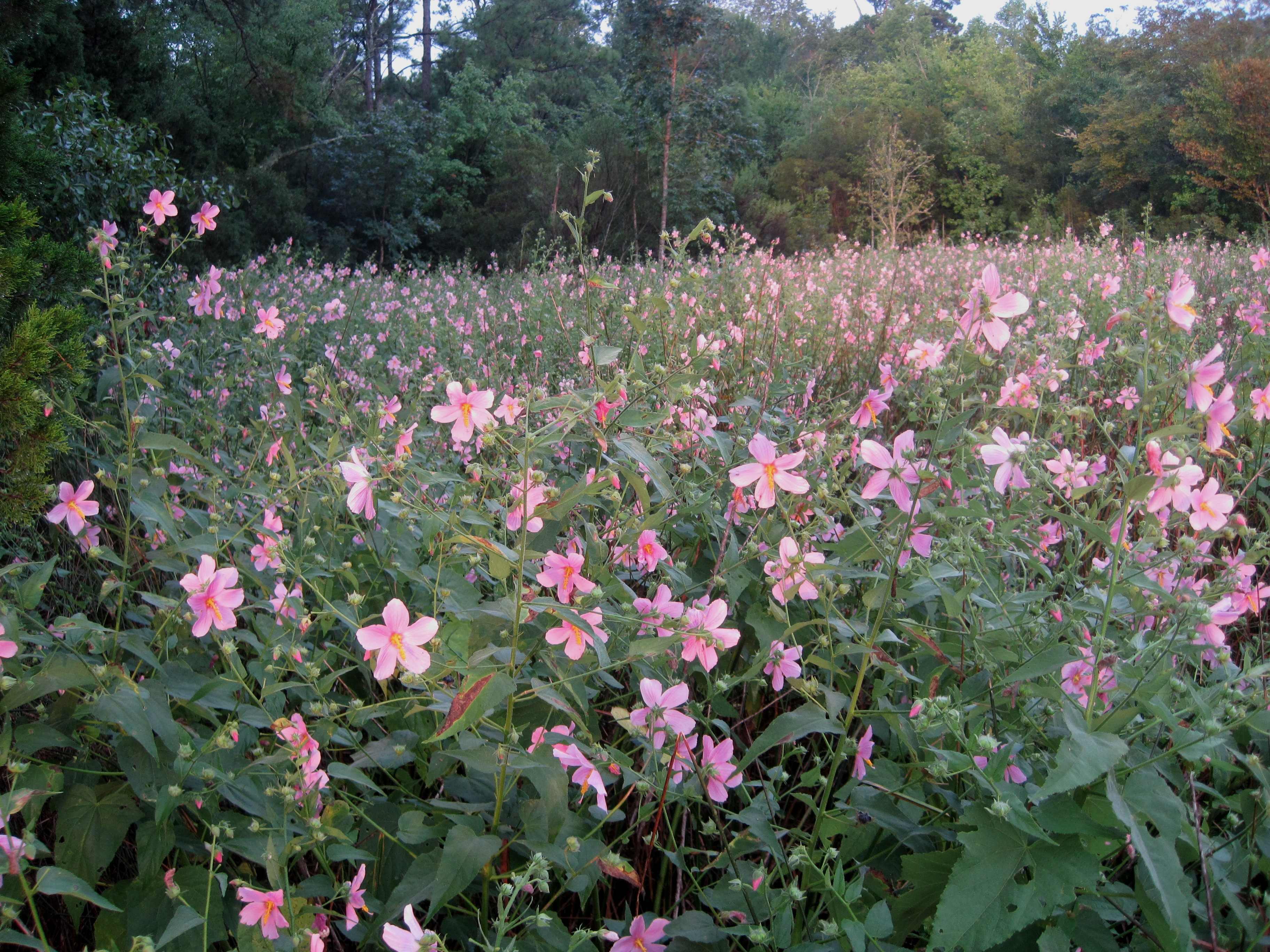
Hibiscus moscheutos - Swamp Rose Mallow
Zones 4-9

I have a soft spot for the softer pink, eyeless forms usually associated with the subspecies Hibiscus moscheutos ssp. palustris.
Purchase from: Prairie Nursery, Rare Find Nursery, Glover Perennials, Possibility Place, Agrecol


Hymenocallis occidentalis var. occidentalis Synonym: H. caroliniana - Northern Spider Lily
Zones 5-?(the literature is all over the place with this one, have seen 8,9, and 10)
I'm still in the process of getting a handle on this southeastern genus, and while I can't speak to the salinity tolerance of H. occidentalis there are multiple subtropical and tropical species that are highly salt tolerant (H. latifolia is often found growing in the company of mangroves in the coasts of Florida, Mexico, and the West Indies). I'm wishfully hoping that this trait is still at least partially present in some of the more cold hardy members of the genus, like H. occidentalis.
Purchase from: Missouri Wildflower Nursery, Niche Gardens, Sunshine Farm and Gardens


Iris prismatica - Slender Blue Flag Iris
Zones 3-9

One of our few native irises tolerant of saline soils. On the smaller side (to 2') and perfectly suited to average garden conditions (can be a bit wide ranging though). There are 2 other species that are tolerant of salt spray (I. hookeri and I. setosa), but I couldn't find any literature supporting their tolerance to saline soils and neither can tolerate the hotter summers you find south of zone 7.
Purchase from: Plant Delights Nursery, Plant Delights Nursery, Nearly Native Nursery, Morning Sky Greenery, Toadshade Wildflower Farm, Gardens In the Wood of Grassy Greek, Edelweiss Perennials


Kosteletzkya virginica syn. K. pentacarpos - Seashore Mallow
Zones (6)7-9

A significantly less hardy, slightly less coarse version of Swamp Rose Mallow, perhaps a bit more salt tolerant. This guy was killed outright in my zone 6a garden, so if you're attempting to grow it north of zone 7, make sure the source plant material is coming from more northerly populations within its range.
Purchase from: Plant Delights Nursery, Environmental Concerns, Niche Gardens, Niche Gardens, Earth First Natives, Almost Eden, Mulberry Woods Nursery, Bryan and Sons


Limonium carolinianum syn. L. nashii - Sea Lavender
Zones 3-9

Perhaps the most salt tolerant flowering species in the northeast. While found growing in wet soils in the wild, in cultivation (sans salty water) it requires good drainage.
Purchase from: Rare Find Nursery, Earth Tones Natives


Sabatia kennedyana - Plymouth Gentian
Zones 4-9, although have seen multiple sources that list this hardy only to zone 7

There's is a closely related, very similar looking and adapted plant S. dodecandra that is equally worth growing. I have included sources for this plant as well below.
Purchase from: Plant Delights Nursery, Niche Gardens, Mellow Marsh Farm, Plant Delights Nursery, Niche Gardens


Symphyotrichum tenuifolium - Perennial Salt-marsh Aster
Zones ?4-9?

Purchase from: Southern Branch Nursery


SALT (SALINE SOIL) TOLERANT TREES:
In the northeast it might be pushing it a bit to call any tree "salt tolerant" and none would probably even come close to even the least tolerant herbaceous species above, but these guys are ultimately as good as it gets. Again none of these species would be able to survive anywhere near the mean hightide line, the idea is simply that they might have more of chance of surviving a major storm event. For a more complete picture, check out this list put out by the Virginia Cooperative Extension.


Amelanchier canadensis - Canada Serviceberry
Zones 4-8
Purchase from: Accents for Home and Garden, Cold Stream Farm, Greenwood Nursery, New England Wetland PLants, Prairie Moon Nursery


Chionanthus virginicus - Fringetree
Zones (4)5-9, although have seen many 3-9
Purchase from: A Nearly Native Nursery, Almost Eden Plants, Forestfarm, Gardensoyvey, Lazy S'S Farm, Niche Gardens, Plant and Gnome, Shady Gardens Nursery, Sooner Plant Farm, Tree Seeds, Vincent Gardens, White Oak Nursery, Nasami Farm


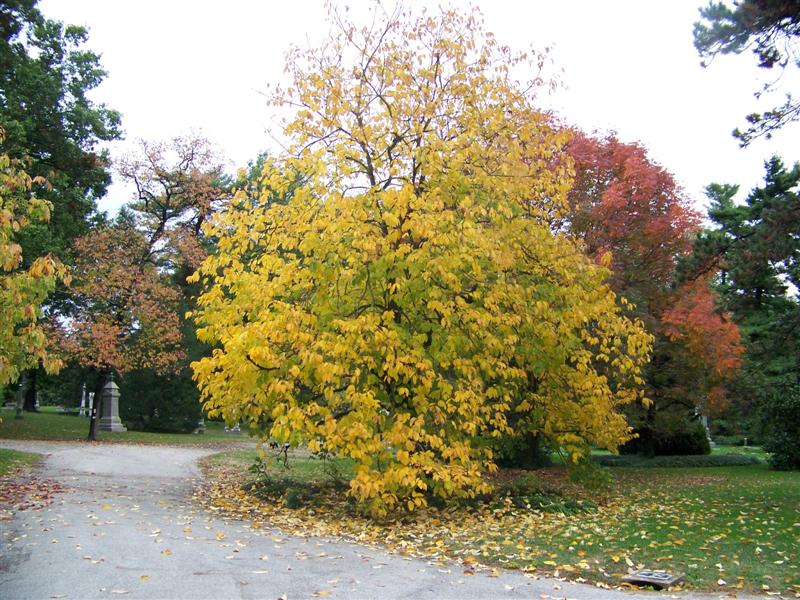
Diospyros virginiana - Common Persimmon
Zones 4-9
Purchase from: A Nearly Native Nursery, Forest Farm, Greenwood Nursery, New England Wetland PLants, Tree Seeds, White Oak Nursery


Juglans nigra - Black Walnut
Zones 4-9

While not exceptionally salt tolerant I consistently find this species growing at the edge of the salt marsh, closer than any other surrounding species.
Purchase from: Cold Stream Farm, Forest Farm, Plant and Gnome, Idaho Forest Research Nursery


Juniperus virginiana - Eastern Red-cedar
Zones 3-9, although have seen everything from 2-9 to 4-9

Despite being common, a very (and perhaps overly so) adaptable evergreen tree.
Purchase from: A Nearly Native Nursery, Purchase this from Cold Stream Farm, Forest Farm, Toadshade Wildflower Farm, Tree Seeds, White Oak Nursery, Environmental Concerns


Magnolia virginiana - Sweetbay Magnolia
Zones 5-9
Purchase from: Beaver Creek, Briggs Forest Farm, Kelly Nursery, Gardensoyvey, Pleasant Run, Sooner Plant Farm, Southeastern Natives, Spring Meadow, Tankard Nurseries, Environmental Concerns


Taxodium distichum - Baldcypress
Zones 4-10

Arguably one of the most unique and adaptable trees in our flora (although the furthest northern extent of its range is Delaware, so technically outside of the northeast) and our only truly aquatic tree. In all likelihood perhaps the most salt tolerant of all temperate trees, there is ongoing work to increase this species salinity tolerance.
Purchase from:Nearly Native Nursery, Boyd Nursery, Cold Stream Farm, Conifer Kingdom, Lazy S'S Farm, Plant and Gnome, Rarexoticseeds, Sooner Plant Farm, Environmental Concerns


IMAGE SOURCES: H. moscheutos (LEFT, RIGHT); H. occidentalis (LEFT, RIGHT); K. virginica (LEFT, RIGHT); L. carolinianum (LEFT, RIGHT); S. kennedyana (LEFT, RIGHT); S. tenuifolium (LEFT, RIGHT); C. virginicus (LEFT, RIGHT); D. virginiana (LEFT, RIGHT); J. nigra (LEFT, RIGHT); J. virginiana (LEFT, RIGHT); M. virginiana (LEFT, RIGHT); T. distichum (LEFT, RIGHT)

Sunday, November 29, 2015

WILD SOMEPLACE ELSE


Gardners are the worst kind of people. Self righteous, opinionated, eccentric, and worst of all woefully ignorant..... Okay maybe not all gardners.... okay maybe its just a small minority of gard-e... myself. I'm talking about myself.

I suppose I should elaborate a bit.

For the record this ignorant gardener actually does do his homework. I have a zero fuss policy and refuse to plant anything that won't do well in the sad excuse for soil I have to work with. Recently, after doing a thorough vetting, it was definitively decided that my garden was in desperate need of some Sanguisorba canadensis. As with most of my "natives" I have an idealistic vision of the plant growing abundantly in some pristine habitat with a bubbling brook, maybe a grassy bank or 2, but mainly far far away from any vestige of civilization or, to put it another way, far, far away from me. In my own defense I think most people think that way. "Wild" is where people aren't, right?

So after shoveling out some 50 odd bucks to a reputable native nursery I happily planted my S. canadensis and they, of course, performed exactly as I predicted, growing vigorously in their new home. Around the time they were flowering this year (August-October for the uninitiated) I was driving along the road to the property where I do the majority of my gardening and was just about there when I noticed something out of the corner of my eye growing in an old field (again this was maybe a minute down the road, in a spot that I have passed by probably hundreds of times before). The spot was the opposite of pristine, there was no bubbling brook, no grassy banks, and very much not far away from any vestige of civilzation. Yet, despite this there was a very content looking little colony (see above) of the very plant I had just shoveled out over half a century in bills for.

This drove home a few things for me.
1. Even when we think we're in tune with our surroundings there's still a lot were blind to, even when these "invisible" things all but smack us up the side of the head.
2. Evolving as a gardner means evolving how you perceive your surroundings, but more importantly finding beauty in the common and under appreciated.
3. "Wild" is a not an other, or pristine, it exists where ever things are able to grow. A back alley in Boston is no more wild than a mountaintop in the Appalachians. And just beacause a plant might not grow in the most virgin far away reaches of the globe does not make it any less worthy of our admiration, protection, or respect.


And so, to make ammends for my past sins, I thought I'd focus in on a few of these species in my own backyard that I've either underappreciated, overlooked, or both. And to do proper pennance for either intentionally removing or accidentally trampling these guys in the not so distant past, if you live in the northeast and would like a seedling (or 2 or 3 or 4) of any of the starred(*) species below just let me know. I've already collected seed from most, and will have a flat or 2 come spring of at least a few of the plants I've highlighted (I already have a few spots picked out for the majority, so they'll have a home regardless of whether or not I get any requests :)


*Amelanchier canadensis - Canada Serviceberry
Zones 4-8
Purchase from: Accents for Home and Garden, Cold Stream Farm, Greenwood Nursery, New England Wetland PLants, Prairie Moon Nursery, Shooting Star Nursery


*Carex pennsylvanica - Pennsylvania Sedge, Oak Sedge
Zone: 4-7, although I've seen plenty of 3-8

After covering over, mowing, pulling up, and overall ignoring the little stand of pennsylvania sedge in my garden, it has refused to give up. It's a little surprising actually, given that the soils are clayey which is the opposite of what pennsylvania sedge prefers. This little population may have some unique genetics that allow it to grow in heavier soils.
Purchase from: Classy Groundcovers, Everwilde Farms, Greenwood Nursery, Morning Sky Greenery, Prairie Nursery, Prairie Moon Nursery, Santa Rosa Gardens, Shooting Star Nursery, Yellow Springs Farm


*Cornus alternifolia - Pagoda Dogwood
Zones 3-8
Purchase from: American Beauties, A Nearly Native Nursery, Cold Stream Farm, Forestfarm, Lazy S'S Farm & Nursery, New England Wetland Plants, Prairie Moon Nursery, Tree Seeds, White Oak Nursery


*Doellingeria umbellata (syn. Aster umbellatus) - Flat-topped White Aster
Zones 3-8
I accidentally collected the seed of this species while attempting to collect both Symphyotrichum laeve and Symphyotrichum prenanthoides. Deer resistant. The fluffy white seed heads look good right up to the first heavy snow.
Purchase from: American Meadows, Everwilde Farms, Morning Sky Greenery, Prairie Moon


Geranium maculatum - Wild Geranium
Zones 3-8
One of our toughest wildflowers. Sun or shade, wet(ish) or dry, I've seen this guy growing in almost every situation you could think of.
Purchase from: Amanda's Garden, American Meadows, Everwilde Farms, Morning Sky Greenery, New Moon Nursery, Outback Nursery, Prairie Moon, Van Berkum Nursery


Hypoxis hirsuta - Yellow Star Grass
Zones 3-9
One of the cutest, longest blooming, and perhaps happiest wildflowers we have.
Purchase from: Earth Tone Natives, Garden Delights, Everwilde Farms, Izel Native Plants, Lazys Farm, Morning Sky Greenery, Mulberry Woods Nursery, Prairie Moon, Sunshine Farms and Gardens


*Rosa carolina - Pasture Rose
Zones 4-9
Purchase from: American Beauties, Carolina Native Nursery, Catskill Native Nursery, Dropseed Native Nursery Everwilde Farms, Forest Keeling, Ion Exchange, Izel Native Plants, Long Island Natives, Outback Nursery, Pleasant Run Nursery, Possibility Place Nursery, Prairie Moon, Prairie Nursery, Wasco Nursery, Wild Ridge Plants


*Sanguisorba canadensis - Canadian Burnet
Zones 3-7
Purchase from: Earth Tone Natives, Klehm's Song Sparrow, Prairie Moon, Project Native, Sunnyborder, Van Berkum Nursery


*Solidago nemoralis - Gray Goldenrod
Zones 3-9
Purchase from: Dropseed Native Nursery, Everwilde Farms, Forrest Keeling Nursery, Hidden Savanna Nursery, Pinelands Nursery, Missouri Wildflowers Nursery, Morning Sky Greenery, New Moon Nursery, Prairie Moon, Spence Nursery


*Solidago speciosa - Showy Goldenrod
Zones 3-9
This plant is perhaps my biggest regret. Granted this picture above doesn't show the buckthorn that was taking over, or the steadily advancing colony of poison ivy, I should have made more of an effort to integrate the existing colony into the garden. I'll be growing a flat or 2 up from seed I collected this season so if your on the market for some S. speciosa just give me a holler.
Purchase from: Almost Eden Plants, Everwilde Farms, Morning Sky Greenery, Niche Gardens, Prairie Moon, Prairie Nursery


*Teucrium canadense - American Germander
Zones Zones 3-9 (also seen 4-8)
Agressively rhizomatous in wet soils and fulls sun, not the showiest of plants, but a good filler for rain gardens among taller, more robust species that it won't overwhelm. Its cotton candy colored flowers aren't too showy, but in mass it makes an impact. Good native alternative to Gooseneck Loosestrife (Lysimachia clethroides).
Purchase from: Dropseed Native Plant Nursery, Earthtone Natives, Everwilde Farms, Ion Exchange, Morning Sky Greenery, Prairie Moon, Sand Mountain Herbs, Toadshade Wildflower Farm


Vaccinium corymbosum - Highbush Blueberry
Zones 3-8
One of our most adaptable and hardy native shrubs and one of the few (or only) ericaceous plants that seems to thrive in heavy clay. I always wondered why anyone ever felt the need to plant Euonymus when we had this native. Beautiful fall foliage, often holding on to its leaves long after most trees and shrubs have dropped theirs.
Purchase from: American Beauties, Burnt Ridge Nursery, Clear Ridge Nursery Fall Creek, Long Island Natives, New England Wetland Plants, Pinelands Nursery, Rare Exotic Seeds, Rare Find Nursery


IMAGE SOURCE FOR TEUCRIUM CANADENSE: LEFT, RIGHT

Saturday, October 31, 2015

TREE ZOMBIE APOCALYPSE


I don't know what it says about me exactly, but for some reason I always seem to end up living next to a graveyard. Granted cemeteries aren't so rare that most people haven't lived close to one at some point in their lives, but so far every place I've called home has either been directly next to, or just down the street from a big graveyard. Even my ol' homestead was just a minute walk from a massive cemetery that you could get lost in if you didn't know where you were going.


Don't let the pretty Sugar Maples fool you....

As any rational kid would conclude, my family would be the first to get munched on in the inevitable zombie apocalypse. I used to lie awake at night planning the best escape route should a hungry horde of 'em finally burst through the door.... the rest of my family was on their own (that's what you get for sticking me in the bedroom next to the basement), anyway I digress.

In addition to giving me way too many vivid nightmares and an overly intense fear of death, this proximity has made me extra observant when it comes to the character of these places. There's one particularly forlorn graveyard that I pass by on my bike ride to work that has recently caught my attention. As with most small city spaces the... aaah, uuuum... occupants? are packed in way too close for comfort, leaving basically zero room for your typical graveyard trees. The few decent sized trees that have managed to eek out an existence are relegated to the edges of the lot, squeezing themselves into the few far away corners where the weed-whackers and road salt can't reach. Which brings me to the most prominent feature of the graveyard..... a real life zombie!!!!!


The "zombie" (and no, I'm not talking about the old guy on the sidewalk, but the dead American Elm, Ulmus americana he's standing next to. Sorry old guy)

Unfortunately, the tree zombie apocalypse seems to already be here, and its putting many of the recent undead themed blockbusters to shame. More and more of our native species seem to be entering some sort of disease induced twilight existence; while not entirely extinct, they haunt their former ranges as mere shadows of their former selves. While everybody seems to know the story of the American Elm (Ulmus americana), there's also the American Chestnut (Castanea dentata), Butternut (Juglans cinerea), our native Ashes (Fraxinus spp.), our native Hemlocks (Tsuga spp.), Flowering Dogwood (Cornus florida), as well as many of our Viburnums (Viburnum spp.) and yes I know they're not trees but I wanted to include them anyway. There are many, many more that I could easily add to this list, but I figured it was depressing enough already.


THE (once) dominant tree species of the northeast (the American Chestnut, Castanea dentata) is now reduce to nothing more than the occasional root sucker.

Those trees species that manage to escape total devastation are often still faced with the persistent threat of exotic pest and disease. The biggest and most recent of these (that has gotten a lot of press coverage and for good reason) is the Asian Longhorned Beetle that has the potential to devastate nearly all U.S. hardwood populations. In addition to potential threats there are plenty of exotic genus specific diseases that while may not be as devastating as some, often contribute to the overall declined of what would otherwise be a healthy tree. Even our native Beech (Fagus grandiflora) is faced with an exotic pest that destroys the most distinguishable and beautiful feature about them, turning their smooth bark into a festering cankerous mess.


Beech Bark Disease - IT'S ALREADY HAPPENING!!!

And of course, the source of nearly all of these diseases (or at least the source of their introduction to North America) are anthropogenic (a.k.a. us dumb people and usually associated with my profession, landscape architecture). The alarming maps charting the rapid spread of these epidemics could easily stand in for any scary, scientificky looking graphic in afore mentioned blockbusters.


Emerald Ash Borer Spread (2011)

But all hope is not lost, or at least not completely. In a few of these instances the source of many of these species destruction is also the source of their salvation, or at least sort of. In the case of the American Elm, American Chestnut, and Flowering Dogwood, they all have fairly closely related Asian and/or European counterparts (Ulmus parviflora, Castanea mollissima, and Cornus kousa to name a few) where many of these diseases are endemic, thus offering a genetic source of disease resistance that is being breed into our native species in an attempt to give them at least some fighting chance (while also corrupting the genetic integrity of the species, but hey, what you gonna do...). In addition to these efforts, our native population of both American Elms and Flowering Dogwoods have produced disease resistant individuals that are now available in the trade (Ulmus americana 'Valley Forge' and Cornus florida 'Appalachian Spring'). So all hope is not lost. You can even observe this first hand. For example, anyone who gardens next to or around an American Elm (before they are inevitably killed by Dutch elm disease) knows that they are prolific seeders. The shear number of seedlings trees produce provides some hope that eventually at least some small portion of these seedlings will develop greater and greater resistance with each passing generation.


Next time your walking around any old northeast town or city take a look in the nearest abandoned lot. You'll be sure to find at least a few young American Elms, maybe even some decent sized trees.

In an effort to help stop the spread of these and other diseases that have the potential to completely wipe out our native forests, plant resistant varieties and be wary of newly introduced exotic species that are closely related to our natives as these could be harbingers of the next dutch-elm disease (a.k.a tree zombie apocalypse). Also do your best when purchasing natives to avoid importing from areas that are heavily infested. People zombies might be science fiction, but tree zombies are science fact. They might not eat your brains but the actual impacts can be pretty damn sad. Consider the film below and do your best to keep the next tree zombie apocalypse from happening.