So I'm going to be in full on crazy plant mode for the next month or so, so no time for blogging at the moment. I mean, I partially do this blog as an exercise in self restraint to make sure my decaying corpse isn't discovered in my apartment several month after my death, buried in a collapsed tower of seed flats, but sometimes you gotta treat yourself so no blog this month. But, to give everyone a bit of clarity during this crazy time I thought I'd give you some insight into the world of scientific plant names and why lately everything seems to be reshuffled and renamed and regrouped to the point where you don't know your Asters from your Asters, or would that be Symphyotrichum, or Eurybia... hmmmm.
Anyway both of these articles (one which I will include directly below, since I can't find it online and the other you can read here), have been written by the amazing Joseph Tychonievich. So just be thankful that at least someone has at least some idea what's going on because this renaming business kinda seems like a massive cluster f***ck. But (while everything points to the contrary) there is, in fact, some logic behind it. Happy reading! :)
ALL OF THE BELOW APPEARED UNDER THE TITLE "My new favorite website: Encyclopedia of Life" ON GREENSPARROW GARDENS, JULY 30, 2014 AND WAS NOT WRITTEN BY ME!!!!
I'm pretty much head over heels in love with this website: Encyclopedia of Life. It is a massive effort to create one huge database for information about all of life. I'd stumbled on the website once or twice before, I think, but it must have been early in the stages of development, because I came away unimpressed. But recently I was contacted be the director of operations to see if I could give some feedback on the project (and when someone's contact information includes the words "Smithsonian Institution" you don't say no) and I am BLOWN away. Such an incredible resource for plant lovers!
The site is great to find good information on incredibly obscure plants... for example, my friend Kelly Norris recently has been gloating on facebook about his Silphium albiflorum. It is a lovely plant I know basically nothing about...
Type that name into eol, and I get tons of great stuff:
- Pictures, ranging from herbarium sheets to the whole plant habit to close ups of the flowers!
- Maps, showing where exactly this has been observed in herbarium records, giving an approximation of the range of the plant:
No, you aren't going blind... there are just TWO tiny spots there in texas. Not a big range on this thing.
These maps a really useful when I'm trying to figure out how hardy something might be. For example, I'm all gaga for Ononis right now, but most of the things I'm growing are basically not in cultivation, so it is hard to get information on how hardy they are.
Type Ononis spinosa into EOL, and...
Those yellow spots go PRETTY far North... don't think winter cold is going to be a problem.
Ononis cenisia (syn, O. cristata) on the other hand...
Doesn't look to promising. We'll see. But I'll be sure to give it some extra protection just in case.
EOL also rocks because it is just for organisms... So you can search for plant names without getting a lot of other clutter.
For example, a Google search for Fabiana gives me this:
Um... NOT quite what I was looking for...
But EOL gives me this:
MUCH better.
The other thing I love about this is getting the proper names for plants. As I learned in my podcast about the naming of plants, there is no organization that decides on one official scientific name for a plant. Rather, if a scientist thinks as name should change, they publish a paper saying so and why, and if other scientists think that makes sense, they start using the new name, and if they don't, they don't. Official names are arrived at by slow consensus... which makes it confusing for the poor gardener who just wants to know what the dang name is.
So... if I want to know about, say, bleeding heart, I type Dicentra spectabilis into EOL, go to the names tab, and I see this:
Three different sources, all listing the possible names of this plant, with the name they prefer marked with a green spot. So, I can see that one has switched to the new Lamprocapnos, but the other two are sticking with Dicentra, which makes me feel fine about staying with Dicentra as well, even though the only reason I don't want it to change is because I can't SPELL Lampro-whateveritis.
But when I do the same thing with Anemonella... turns out they all agree it is Thalictrum now. Guess I'm going to have to get used to that one...
Other cool things to do with EOL:
Find pictures that drive my ever growing obsession with Gladiolus into even wilder frenzy:
And browse randomly to discover useful facts like that a Koala weighs 0.36 grams at birth, or discover that raccoons first appeared between 1.8 and 4.9 million years ago, and there are TWO references which say that raccoons feed on american alligators! That is has got to be a bad ass raccoon.
In short, it is a delightful rabbit hole of delightful information! I'm thoroughly entranced.
Saturday, April 30, 2016
Thursday, March 31, 2016
GARDENERS ANONYMOUS (ALSO COOL SEDGES)

Across america, there is a growing and insidious epidemic. Often hidden in plain sight, sometimes even those who are most afflicted are totally unaware. It could be your neighbor, your son, maybe your mother, and even grandma. Scratch that, ESPECIALLY grandma. Yes, there is no denying it, gardeners are everywhere, and they need your help. As a recovering gardener myself, I speak from first hand experience when I say that it can get downright nasty. Old poop. Plant sex. Life purpose. Disgusting, unspeakable things. Back in the day, for the right packet of seeds I would do anything. ANYTHING. I'm talkin back alley, bathroom stall, weird ass sh****t. And in a completely unrelated topic, does anyone have any pre-stratified Thalictrum-dasycarpum seed? I'm asking for a... uuuum, a friend. Yes, that's it, a friend. Cause I'm totally rehabilitated... Completely.
Anyway this devastating disease is often at its peak during this time of the year and the symptoms are usually fairly easy to spot: obsessive seed sowing, attraction to bright colors, spending bill and food money on plants of all types, etc.. Unfortunately, many of these sad individuals will never be free of the disease and are doomed to live a life full of self renewing happiness, fulfillment, and wonder. So while the addiction itself my be utterly hopeless, I urge the family members of gardeners to encourage at least a modicum of self restraint during the spring season. To aid in the prevention of short sighted binging on luscious, colorful, but ephemeral spring blooms that will just leave gaping holes in the garden and the soul once spring is through, I've put together a list of plants that may help to calm the florally obsessed mind. After all, gardeners must be continually reminded (especially once the snow begins to melt) that there are more to plants than just flowers, and there is no better way to do that than focusing in on our least flowery of genus's (geni?), Carex.
Carex is a BIG cosmopolitan genus of grassy plants found on every continent except Antarctica, often thriving in places that are too extreme (by means of too much moisture, too much shade, or excessive sterility) for other species to properly grow. Rather than attempt to list all representative in eastern North America, I've limited my list to the more refined, finer species of the east coast, focusing primarily on foliage. If I missed any of the more garden worthy individuals please scold me thoroughly. I've grouped some species by similar habit, appearance, and growing conditions. Provided the cultural requirements are met, most of the species below are also great candidates for no mow lawns. Garden Rant did a great summary of sedge based lawn alternative plantings at the Scott Arboretum. Check it out.
GARDEN WORTHY CAREX SPECIES OF EASTERN NORTH AMERICA

Carex appalachia - Appalachian Sedge
Zones 3-8
Appropriate that this guy comes first alphabetically, as it is one of our finest. Clumper. Won't tolerate wet soils.
Purchase from: Amanda's Garden, Niche Gardens, Sooner Plant Farm, Toadshade Wildflower Farm, Plant Delights Nursery, Sunshine Farm and Gardens

Carex albicans - White-tinged Sedge
Zones 4-8
I had never heard of this species till I came across it online as one of the "best performers" in the Scott Arboretum's lawn alternative plantings. Adapatable clumping species that reseeds when happy. Performs admirably in dry shade.
Purchase from: New Moon Nursery, Green Light Plants

Carex cherokeensis - Cherokee Sedge
Zones 6-9
If you want to grow C. pensylvanica but your soils are a bit too heavy and your summers a bit too hot try Cherokee Sedge for a larger, slightly messier version.
Purchase from: Niche Gardens, Plant Delights Nursery, New Moon Nursery, Hoffman Nursery

Carex crinita - Fringed Sedge
Zones 3-9
This might just be the nostalgia talking but I feel like this guy is one of the most under-appreciated of our native sedges. This plant was all over the place around the little brook where we played in as kids and despite growing in the shadiest and muckiest of places always seemed to catch the light just right so it was perpetually glowing.
Purchase from: Prairie Moon, New Moon Nursery, New Moon Nursery, Ohio Prairie Nursery, Hoffman Nursery, Possibility Place Nursery, Agrecol Native Nursery, New England Wetland Plants

Carex eburnea - Bristle-leaf Sedge (Pictured Above)
Zones 2-8
Carex retroflexa - Reflexed sedge
?Zones 5-9? - No consistent listing on this
These 2 clumpers, while not closely related, have a similar habbit and tolerance of drier soils. C. eburnea is the stronger tighter clumper of the 2 to the extent it is sometimes described as a "half burried green porcupine."
C. eburnea - Purchase from: Prairie Nursery, Prairie Moon, Plant Delights Nursery, Broken Arrow Nursery, Kelly Nursery, Morning Sky Greenery, Native Plants in Claremont, New England Wetland Plants
C. retroflexa - Purchase from: Plant Delights Nursery, Blooming Nursery, Wholesale Nursery
Carex glaucodea syn. flaccosperma - Blue Sedge
Zones (4)-8
Carex laxiculmus - Spreading Sedge (Pictured Above)
Zones 5-8
Carex amphibola - Creek Sedge
Zones 3-8
These guys are as close to a native liriope as your gonna get, with C. amphibola being pretty much a dead ringer for the ubiquitous groundcover (also of the group, probably the most adaptable).
C. glaucodea (syn. flaccosperma) - Purchase from: Fiddlehead Creek, Dropseed, Chesapeake Natives, Behnke, Wholesale Nursery, North Creek, New Moon, Bluestone, Plant Delights, Lazyss Farm, Kiefer Nursery, Niche Gardens, Bohn's Farms, Hoffman Nursery.
C. laxiculmus - Purchase from: North Creek, Plant Delights, New Moon, Hoffman, Sunlight Gardens, Santa Rosa Gardens, Classy Groundcovers, Rarefind Nursery, Pleasant Run Nursery, Emerald Coast Growers, Midwest Groundcovers, Saunders Brothers, Green Leaf, Gardens of Blueridge
C. amphibola - Purchase from: North Creek, Hoffman Nursery, New Moon, Prairie Moon, Wholesale Nursery, Bohn's Farm. Fiddlehead Creek, Gardens of Blueridge

Carex lasiocarpa - Wooly-fruited Sedge
Zones 3-7
A graceful, billowy, and robust sedge of northern marshes and lakeshores.
Purchase from: Prairie Moon, Fourth Corner Nurseries

Carex muskingumensis - Palm Sedge
Zone: 4-8
An awesome textural, adaptable, and multipurpose plant that somehow I've totally overlooked. Soon to be found in my garden.... as soon as I find some room :-/ A handful of cultivars available in the trade including the dwarf 'Little Midge' and the golden stripped 'Oehme.'
Purchase Fronm: Amanda's Garden, Forest Farm, Lazyss Farm, Prairie Nursery, Prairie Moon, New Moon, North Creek, Hoffman Nursery, Digging Dog, Possibility Place, Bluestem Nursery, Pleasant Run Nursery, Kelly Nursery, Forrest Keeling, Wholesale Nursery, Connon Nurseries, Hoffie

Carex pensylvanica - Pennsylvania Sedge, Oak Sedge (Pictured Above)
Zone: (3)4-7
Carex texensis - Texas or Catlin Sedge
Zone: 5-9, although I've seen a several 7-10
As far as groundcovers go these 2 compliment one another pretty well. If you're dealing with sandy acidic sterile soils and live in the northern half of the country (except the extreme north) C. pensylvanica is where its at. If you have a heavier (provided it is not wet) soil and live in the southern half of the country (except the extreme south) give C. texensis a try. I've used a not so flattering, rather sparse looking image of C. pensylvanica as a not so subtle reminder that even though sedges are tough plants, in order to get them to look lush and thriving as shown in many of the images used to market them (especially C. pensylvanica), you often need to plant them in conditions that are at least sightly better than what you would find in the wild.
C. pensylvanica - Purchase from: Classy Groundcovers, Everwilde Farms, Greenwood Nursery, Morning Sky Greenery, Prairie Nursery, Prairie Moon Nursery, Santa Rosa Gardens, Shooting Star Nursery, Yellow Springs Farm, Bluestem Nursery, Droopseed Nursery
C. texensis - Purchase from: Plant Delights, Niche Gardens, Hoffman, New Moon, San Marcos, Wholesale Nursery
Carex plantaginea - Plantain-leaved or Seersucker Sedge (Pictured Above)
Zone: 4-8
Carex platyphylla - Silver Sedge
Zone: 4-8
The widest leaves of any of our native sedges, and while other sedges are shade tolerant, these 2 species need shade to truly thrive. Basically a green (C. plantaginea) and blue (C. platyphylla) variation of one another. Both are evergreen to semi-evergreen depending on the climate.
C. plantaginea - Purchase from: Lazyss Farm, Prairie Nursery, Rarefind, Pleasant Run, North Creek, New Moon, Hoffman, Fiddlehead Creek
C. platyphylla - Purchase from: Dropseed, Sunlight Gardens, Plant Delights, Klehm's Song Sparrow, Lazy S'S Farm, Dropseed, Van Berkum, North Creek, New Moon, Pleasant Run, Fiddlehead Creek, Stonehouse Nursery, Broken Arrow
Carex radiata - Eastern Star Sedge
Zone: 3-8
Carex rosea - Curly-Styled Wood or Rosy Sedge (Pictured Above)
Zone: 3-8
Even the experts apparently have difficulty telling these 2 apart; both fine textured clumpers, both adaptle to a range of soil types, with C. rosea being a bit more tolerant of excessive moisture.
Carex radiata - Purchase from: Prairie Nursery, Prairie Moon, Plant Delights, Possibility PLace, North Creek, New Moon
Carex rosea - Purchase from: Prairie Moon, Prairie Nursery, Bluestem Nursery, Morningsky Greenery, Toadshade, New Moon, Hoffman Nursery, Possibility Place

Carex socialis - Low Woodland or Social Sedge (Pictured Above)
Zone: (5)6-9
Carex leavenworthii - Leavenworth's Sedge
Zone: (5)6-9
Carex woodii - Pretty Sedge
Zone: 4-6
Let me start out by saying that the image above is different than the one before it, and despite looking extremely similar supposedly it is a different species. The truth is the information on these 3 was sparse at best, and while a few sources referred to them as clumping, most had them listed as having a running habit. Overall though they seemed like they would make great, adaptable alternatives to C. pensylvanica if your dealing with a heavier soil. I'd like to list them up with C. pensylvanica as well, but until I find more information I'll relegate them to this little band of misfits. Of the 3, there is the least amount of information on C. woodii, so if you come across a good source let me know!
Carex socialis - Purchase from: Plant Delights, New Moon
Carex leavenworthii - Purchase from: Plant Delights, New Moon, Bluestem Nursery, San Marcos Growers
Carex woodii - Purchase from: New Moon, Izel Plants

Carex sprengelii - Long Beaked or Sprengel's Sedge
Zone: 3-9
I keep find references of this being a beautiful ornamental sedge, although the pictures I've come across haven't been particularly overwhelming. Maybe its one of those plants that can't really be captured in photographs. Anyway have yet to grow or come across it in the wild so I'll wait till I see it first hand before passing judgement.
Purchase from: Ion Exchange, Morningsky Greenery, Prairie Moon, Prairie Nursery, Agrecol, New Moon, Outback Nursery

Carex stricta - Tussock or Upright Sedge (Pictured Above)
Zone: 3-8
Carex bromoides - Brome Hummock Sedge
Zone: 3-8
C. stricta will always be lodged in my memory from my winter explorations of the frozen swamp in my backyard when I was a kid. The little goupings of the plant always reminded me a bit of a horde of cousin its rising from the swamp. The tussocks were just the right size for an 8 year old to sit on (hopefully I didn't damage them too badly), As much as I can gather C. bromoides is a closely related species with a more northern distribution.
C. stricta - Purchase from: New England Wetland Plants, Ion Exchange, Agrecol, Morning Sky Greenery, Prairie Moon, North Creek, New Moon, Hoffman Nursery, Pinelands Nursery, Possibility Place, Forest Keeling, Catskill Native Nursery, Hoffie Nursery, High Ranch Nursery, Long Island Natives
C. bromoides - Purchase from: Agrecol, Natural Garden Natives, Spence Nursery, Izel Native Plants, Wholesale Nursery
IMAGES SOURCES: C. appalachia, C. albicans, C. cherokeensis, C. crinita, C. eburnea, C. laxiculmus, C. lasiocarpa, C. muskingumensis, C. pennsylvanica, C. plantaginea, C. rosea, C. socialis, C. sprengelii, C. stricta
Monday, February 29, 2016
LANDSCAPES OF NOTHING

Scenes from my daily commute. From left to right: Echium vulgare & Festuca sp., Verbascum thapsus, and Asclepias syriaca. These images give me pause about the value of landscape archicture as a profession. More often then not the spaces I prefer are produced from unintentional happenstance as opposed to intentional circumstance. If these spaces are simply a byproduct of human activity and disturbance, why does it seem we have to work twice as hard and produce so much waste trying to make something half as good?
Internal clarity is not one of my strong suits. It is a very rare moment for me to have a singular thought that doesn't immediately veer off into a series of tangents that send me careening down a road where I not only have no idea where I'm headed, but also have no way of steering the car. This is what made a particular instance from what is now several years ago so memorable. I was in between classes and a friend was telling me about an elective she was taking called "the architecture of nothing." Rather than my mind doing its normal thing and spiraling completely out of control, I just sat there for a moment to chew over the name for a bit... "the architecture of nothing?"... As with most things that seem to be heavy with meaning I decided it was A.) something either brilliantly profound or B.) absolute bullshit. Either way it was this very brief conversation about the class and its ideas that ultimate framed how I view the profession (landscape architecture) and its practice.
The truth is that the course probably was more bullshit than brilliantly profound (hell, the majority of my higher education was looking back), but nonetheless, the conversation it encouraged between me and my friend lead me down the path that would eventually provide me with a sincere appreciation for not only a minimal aesthetic, but the idea that the most skilled designers leave very little trace of their work. Whether undetectable all together or deceivingly simple, the most dynamic designs often take this approach not only when it comes to looks, but make it integral to nearly every part of the project; minimal disturbance, minimal impacts, minimal maintenance, etc. Unfortunately, those that only reflect this in the end product often go in the opposite direction as far as impacts and inputs over the long term. So while producing true "landscapes of nothing" can be overly complex, the plant selection doesn't have to be. While contextualization and specificity are always priority number one (generalization is always the enemy of good design), the following list captures this minimalistic spirit (at least in the northeast) in both aesthetic and temperament. Unfortunately, most of these plants go largely unnoticed in places that people overlook or simply don't care to look at.
SHRUBS:

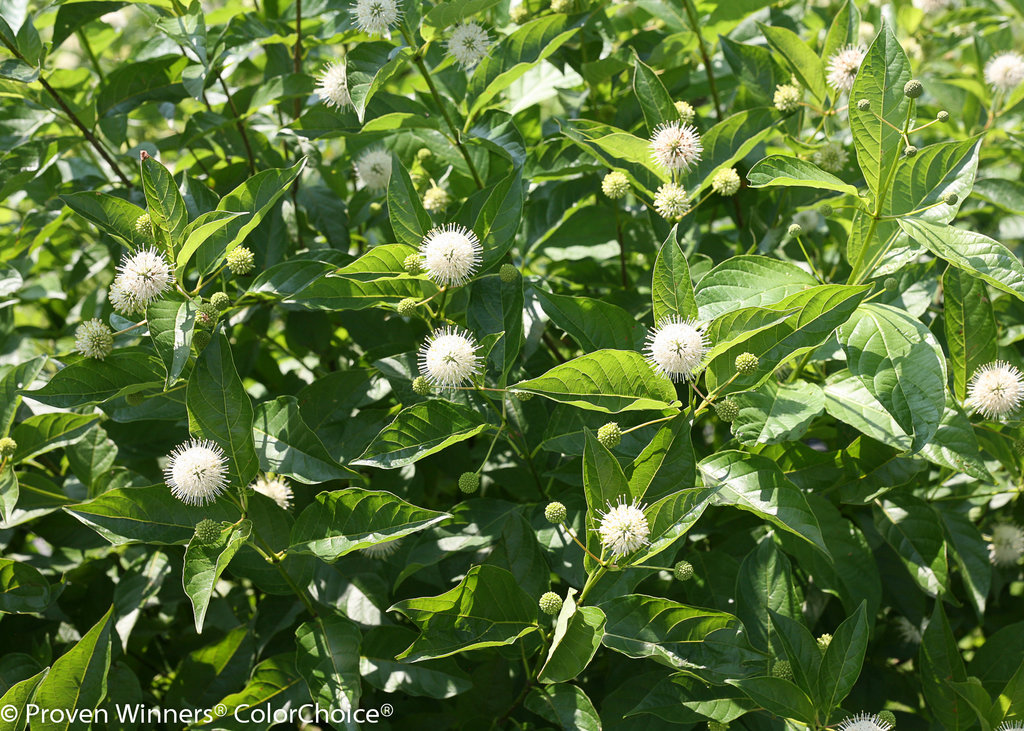
Cephalanthus occidentalis - Buttonbush
Zones (4)5-10
This underutilized very wide ranging native shrub may not garner much attention in its boggy haunts, but provided a soil that doesn't dry out (can take standing water as well) and a bit-o-sun it performs admirably. Never a standout, but a great filler. Lustrous dark green foliage when grown well. Cultivars include 'Sputnik,'Sugar Shack,' and 'Moonlight Fantasy.'
Purchase from: Prairie Moon Nursery, Pine Lands Nursery, Ion Exchange, Possibility Place, Rare Find Nursery, Cold Stream Farm, Niche Gardens, Long Island Natives, Toadshade, White Oak Nursery, Vincent Gardens, Almost Eden

Comptonia peregrina - Sweet Fern
Zones 2-6(7)
My dad seemed to be constantly tearing bits of this plant for my sister and I to smell when we were kids, and may have been one of the first plants I learned to recognize. A colonizing nitrogen fixer fond of acidic sterile soils.
Purchase from: Possibility Place, Pinelands Nursery Prairie Nursery, Rare Find Nursery, Pleasant Run, Forest Farm

Dirca palustirs - Leatherwood
Zones (3)4-9
Rather common in the literature, but uncommon in the trade. A rather squat and sturdy shrub, that's perfectly content in wet shade. pH adabtable. Flowers not quite as showy, but similar to Spicebush (L. benzoin). In all honesty the form reminds me a lot of Euonymus alatus but with a bit more character.
Purchase from: Prairie Moon, Broken Arrow, E.C. Brown's Nursery, Rare Find Nursery, Reeseville Ridge, Easy Wildflowers

Rhus typhina - Staghorn Sumac
Zones (3)4-8
A native species long appreciated in Europe for its ornamental attributes, only recently fully appreciated here in the US. Anyone in the northeast that has ever driven any major highway outside of the city probably knows this plant (even if they don't know its name). Unparalleled fall color. Soil and pH adaptable. Cultivars include 'Dissecta,' 'Laciniata,' and 'Tiger Eyes.'
Purchase from: Forest Farm, Cold Stream Farm, New England Wetland Plants, Sooner Plant Farm, Toadshade, Pinelands Nursery, Possibility Place Nursery, Urban Tree Farm

Xanthorhiza simplicissima - Yellowroot
Zones 3-9
One of the most adaptable shrubs in our flora, seemingly tailor-made for massing in trouble spots. Will grow well in most conditions provided the pH isn't too high.
Purchase from: Quackin Grass Nursery, American Beauties, Forest Farm, Pleasant Run Nursery, Van Berkum Nursery
HERBACEOUS PERENNIALS:

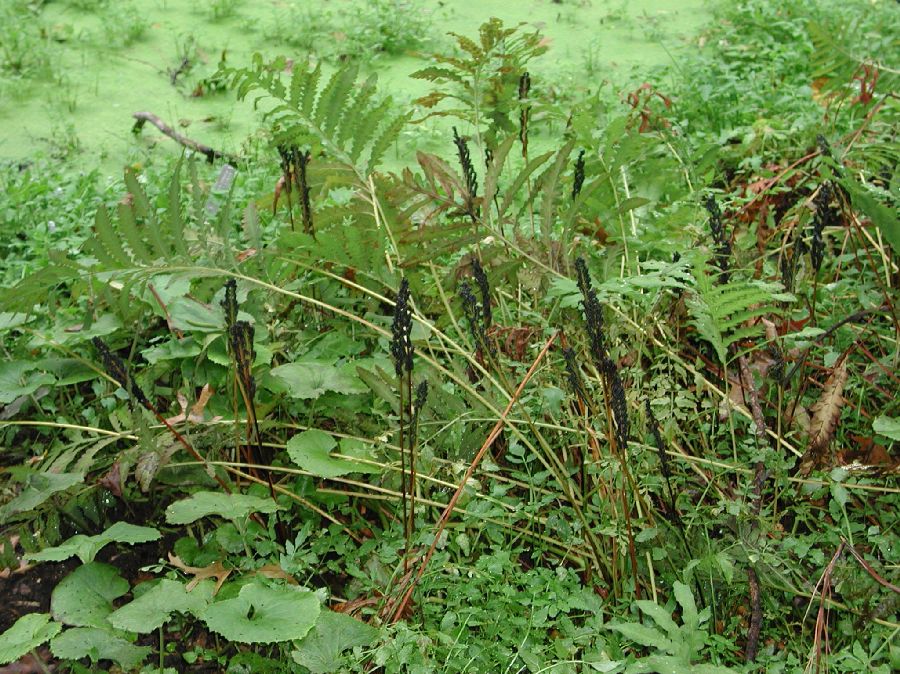
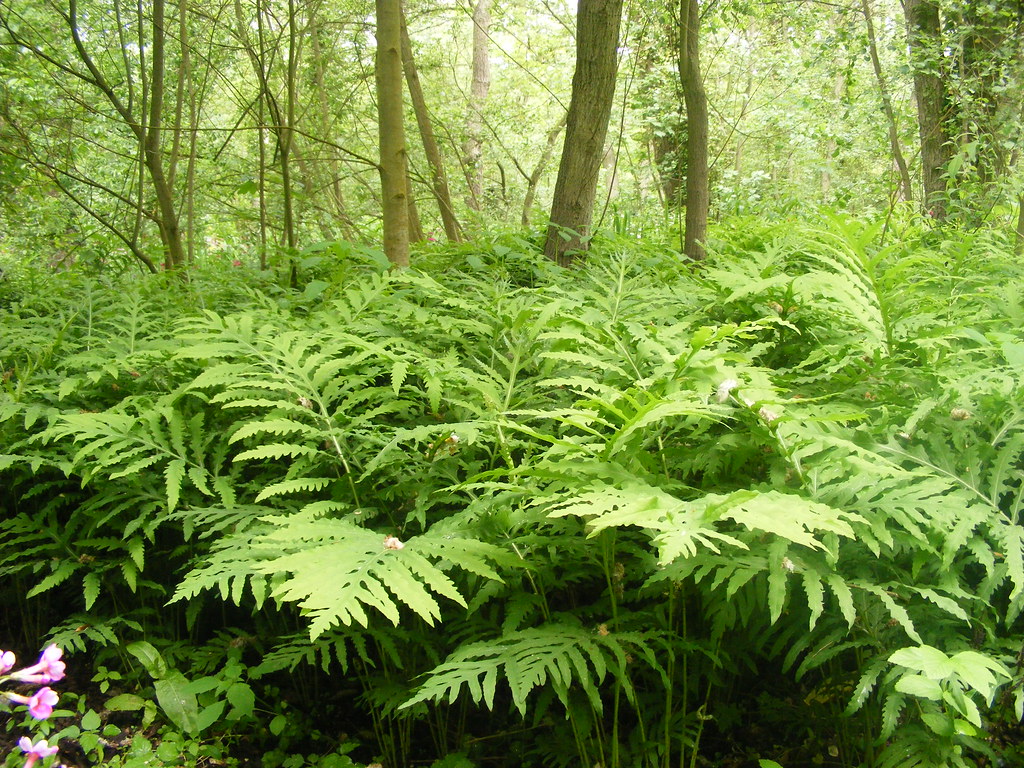
Onoclea sensibilis - Sensitive Fern
Zones 3-9
One of the easiest ferns to identify and perhaps one of the easiest to grow (provided it has moisture). A bit aggressive if happy.
Purchase from: Prairie Nursery, Possibility Place, Pinelands Nursery, Catskill Nursery, Prairie Moon, New England Wetland Plants, Long Island Natives, Lazy S'S Farm, Toadshade Farm, Yellow Springs Farm

Schizachyrium scoparium - Little Bluestem
Zones 3-9
I become more enamored with this wide ranging warm season grass with each passing year. The only season it comes up short is spring, otherwise a great performer through summer, fall, and winter. One of the few grasses that refuses to be flattened by heavy snows. Amazingly resilient and adaptable. A huge number of cultivars with most emphasizing blue variants and upright forms.
Purchase from: Prairie Nursery, North Creek, Bluestone Perennials, Plant Delights, Prairie Moon, Avant Gardens, Rare Find, Digging Dog, Possibility Place, American Meadows, Everwilde Farms, Toadshade

Symplocarpus foetidus - Skunk Cabbage
Zone: 3-7
Seemingly out of place in the swamps and lowlands of the northeast. S. foetidus seems far too exotic and primordial for the reserved New England, yet it is a staple of our early spring floral chorus. Needs a wet soil to grow well. Will not tolerate any amount of dryness.
Purchase from: Amanda's Garden, Far Reaches Farm, Lazy S'S Farm
IMAGE SOURCES: C. occidentalis (left, right); D. palustris (left, right); X. simplicissima (left, right); O. sensibilis (left, right); S. foetidus (left, right)
Subscribe to:
Posts (Atom)